Table of contents
What did Shopify, Klaviyo and Gorgias ship in August 2026, and what should lifestyle brands do about it?
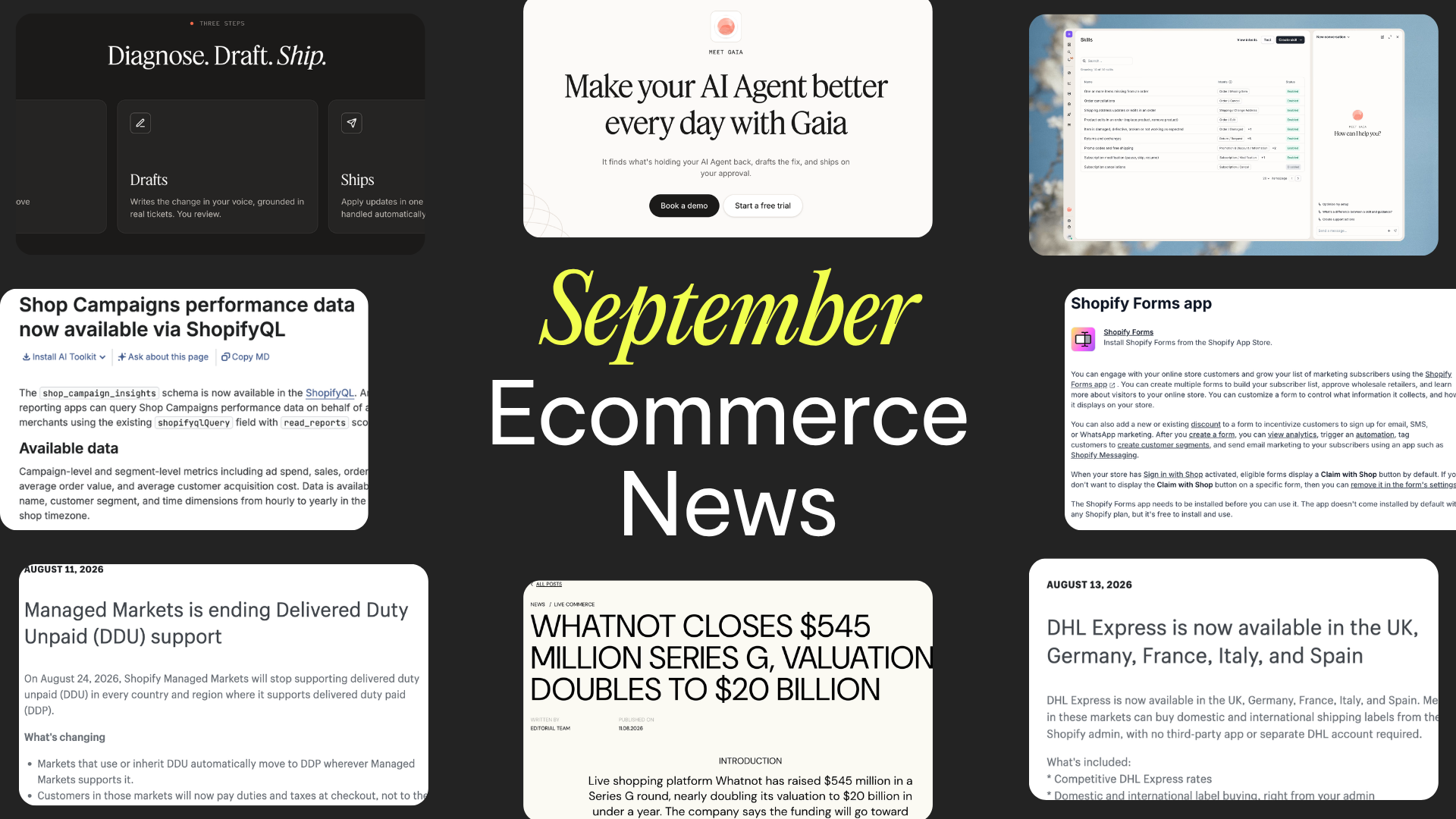
Shopify shut off Delivered Duty Unpaid today, in every Managed Markets country where it already offers Delivered Duty Paid. That's the biggest deadline in this update, and it already passed by the time most people read this sentence. Everything else moves slower. Klaviyo shipped two settings worth checking. Shopify's own earnings call finally put a number on AI search. And Gorgias' AI teammate is now selling, not just answering tickets.
Do now
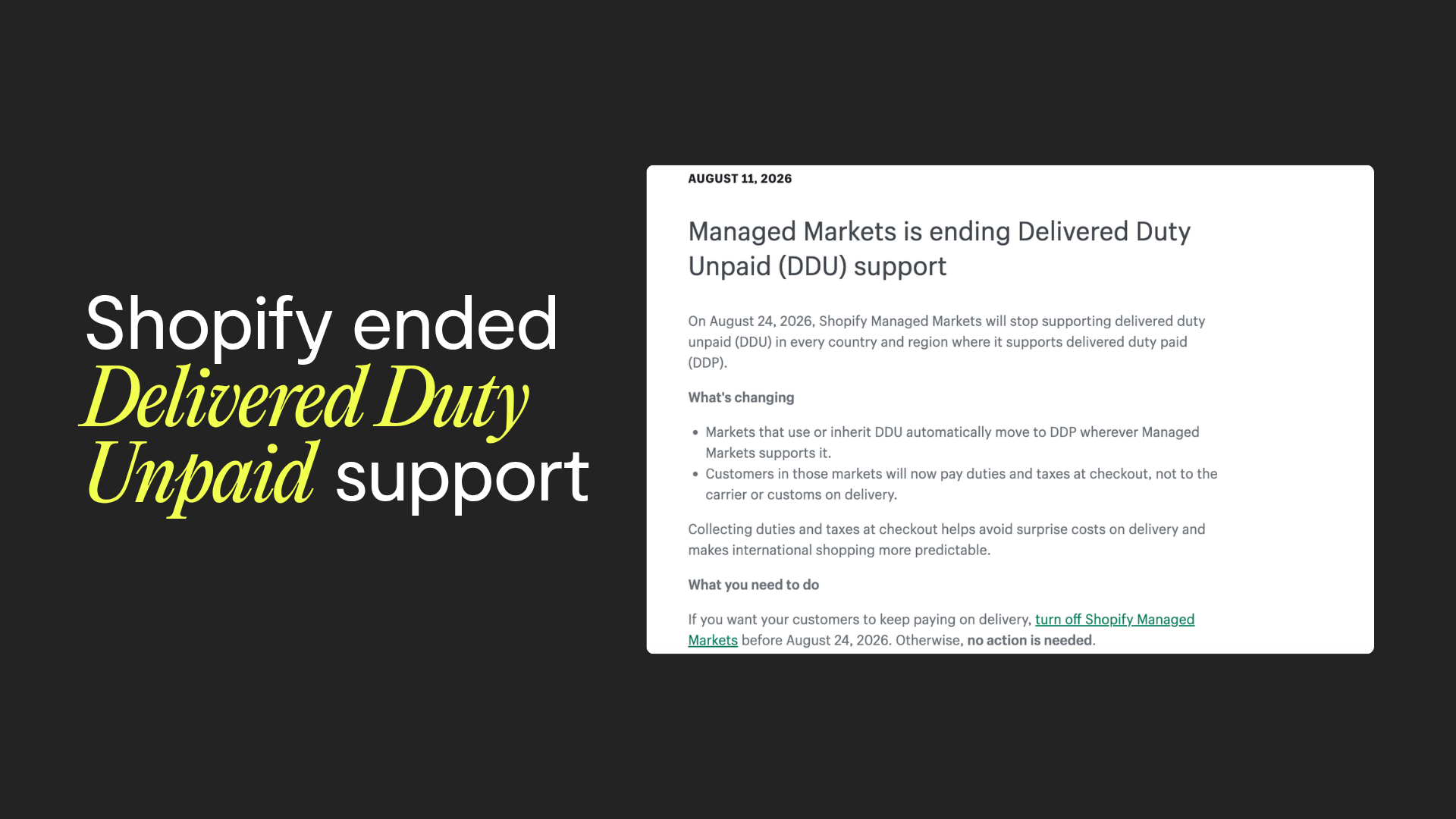
Shopify ended Delivered Duty Unpaid support today, August 24.
Any market that was running DDU switched automatically to Delivered Duty Paid. Customers there now pay duties and tax at checkout, instead of getting billed by a courier on delivery. Most brands were never deliberately choosing DDU, so this fixes itself. Check Settings → Markets anyway. If you actually wanted DDU somewhere, that choice already got made for you, and you'll need to raise it with Shopify directly.
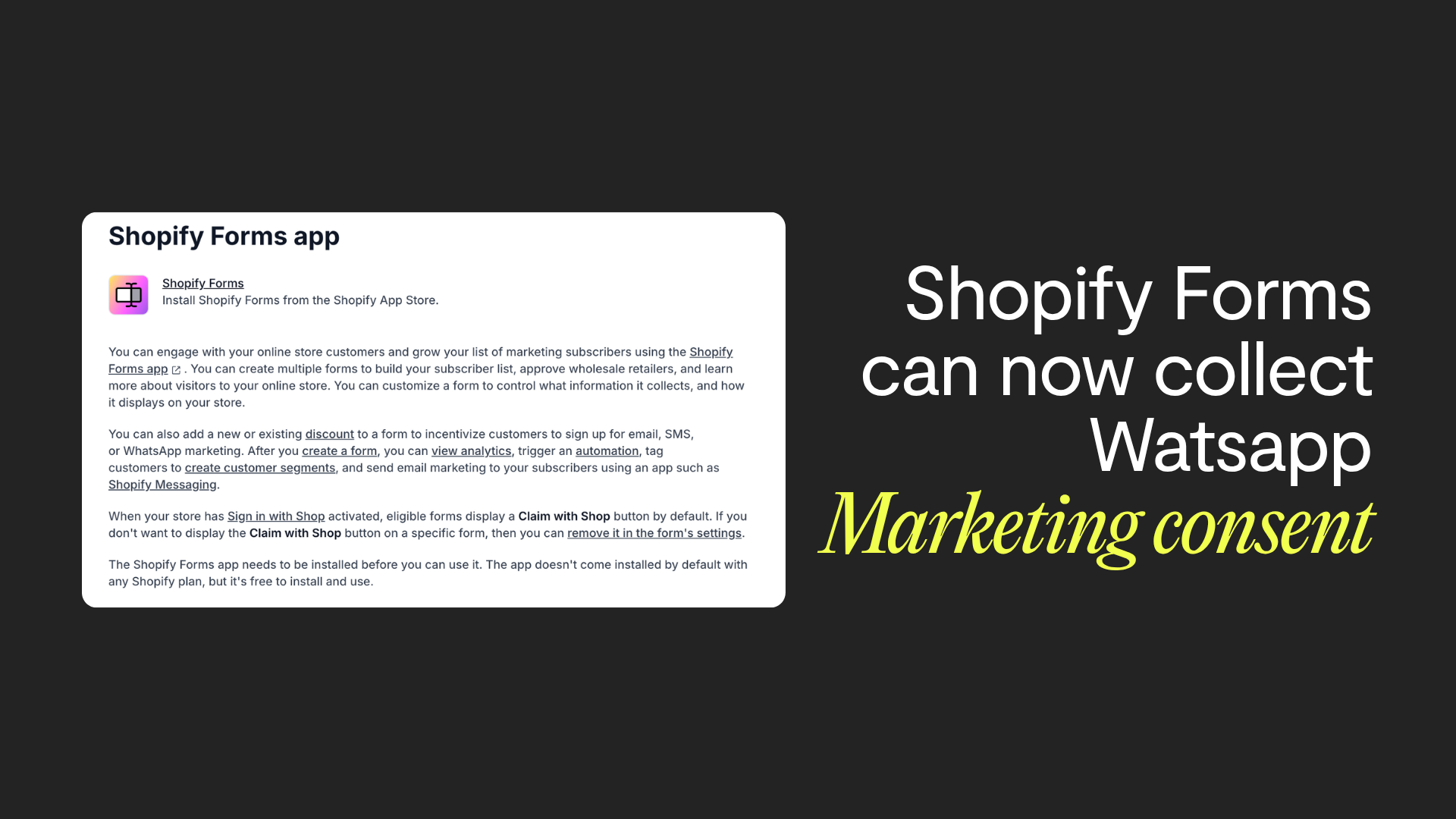
Shopify Forms can now collect WhatsApp marketing consent.
This builds on July's native WhatsApp marketing inside Shopify Messaging. WhatsApp needs opt-in before you can send anything, and a list takes weeks to build. Turn the consent field on this week and you have a usable list by Black Friday. Wait until November and you're building a channel from zero in your busiest month.
Check Klaviyo's email open-tracking consent setting if you have subscribers in France or Italy.
Both countries now require consent before using tracking pixels in email. Klaviyo added the control in July, at the account level or per recipient. It's tied to where the subscriber lives, not to how much revenue that market brings in. Five minutes in Account Settings → Email Engagement Tracking either confirms you're covered or tells you you're not.
Turn on Klaviyo's locale sync to Shopify if you sell into more than one language or region.
Before this, a brand's storefront and its email could each assume a different language for the same customer. There was no single source of truth between them, which is how someone ends up getting a French email and an English checkout. One setting in the integration fixes it.
On the roadmap
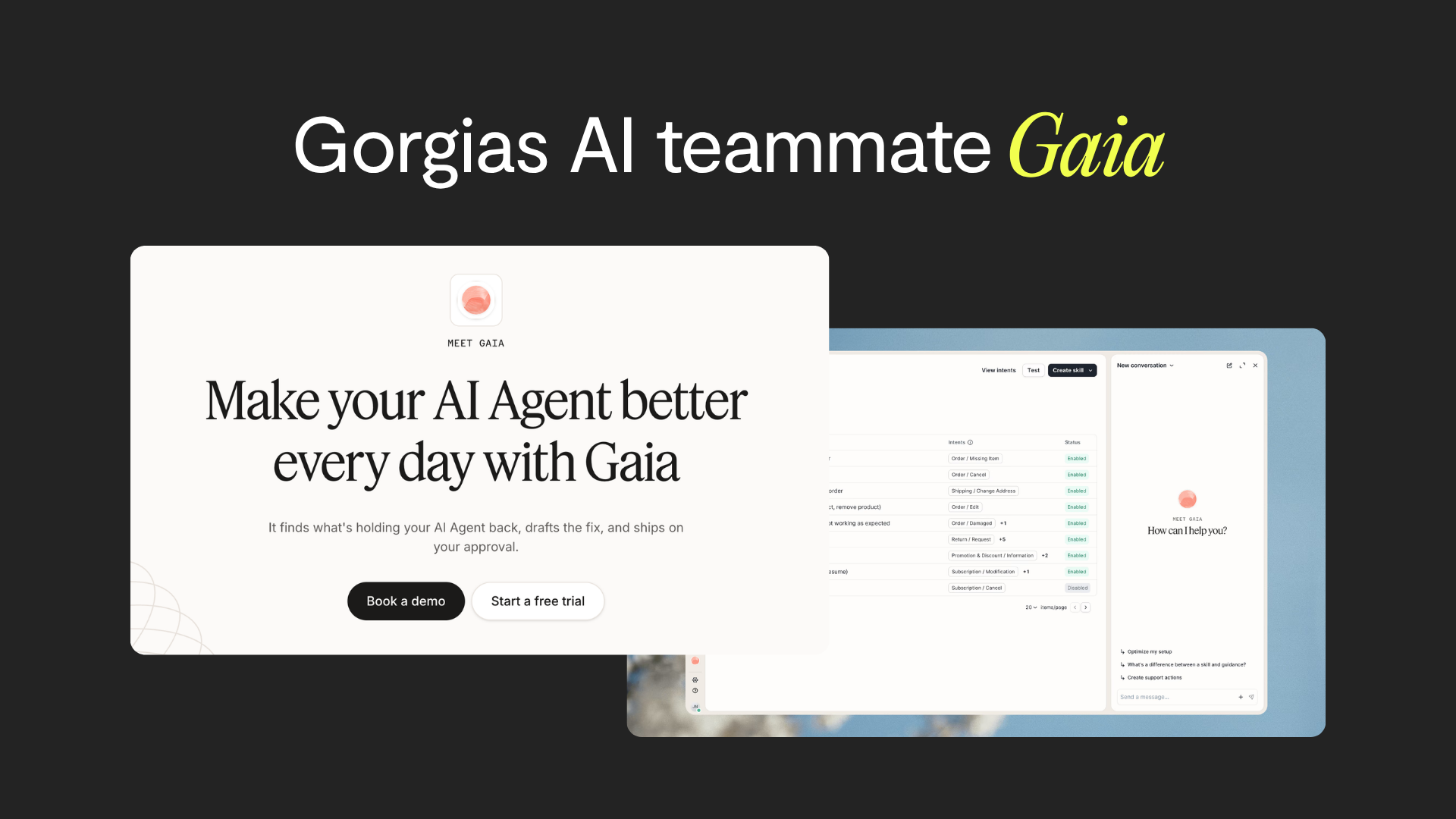
Gorgias' AI teammate Gaia is now in open beta for every account.
The AI Agent can also pull product reviews and suggest similar products inside a chat, not just answer the question asked. That's a step past ticket deflection. A ticket that also converts is now something you can measure, not just hope for. If you're running Gorgias, put "check whether the AI Agent is actually set up to sell" on the next sprint, not the someday list.
Shopify's own Q2 2026 earnings say AI-referred storefront traffic and orders roughly tripled year over year.
Those orders converted nearly 50% higher than orders from organic search, with 14% bigger order values. More than half of AI-referred visits land straight on a product page, against about 20% for organic. That's Shopify reporting a number to its shareholders because it moved the business, not a stat from a pitch deck. Organic search still sends more total traffic than every AI platform combined, so this isn't a channel to drop everything else for. It is a channel worth pulling out of your own analytics and measuring on its own, rather than folding into "other."
Shopify's product and SEO teams published exactly which catalog fields an AI shopping agent reads first: title, description, images, options, and tags.
Category metafields decide which attributes an agent can filter on. A new Agentic Dashboard inside Shopify admin previews how an agent currently ranks a given listing. An agent filters rather than ranks, so one empty field on an attribute a shopper filters by removes a product from the results entirely. A plain tag like "linen" gets read correctly. A SKU code like "GYS1121" doesn't, unless it's rewritten as sku: GYS1121. Run this against your ten best sellers this quarter. It's the mechanism behind the stat above, and the difference between benefiting from it or not.
Keep an eye on
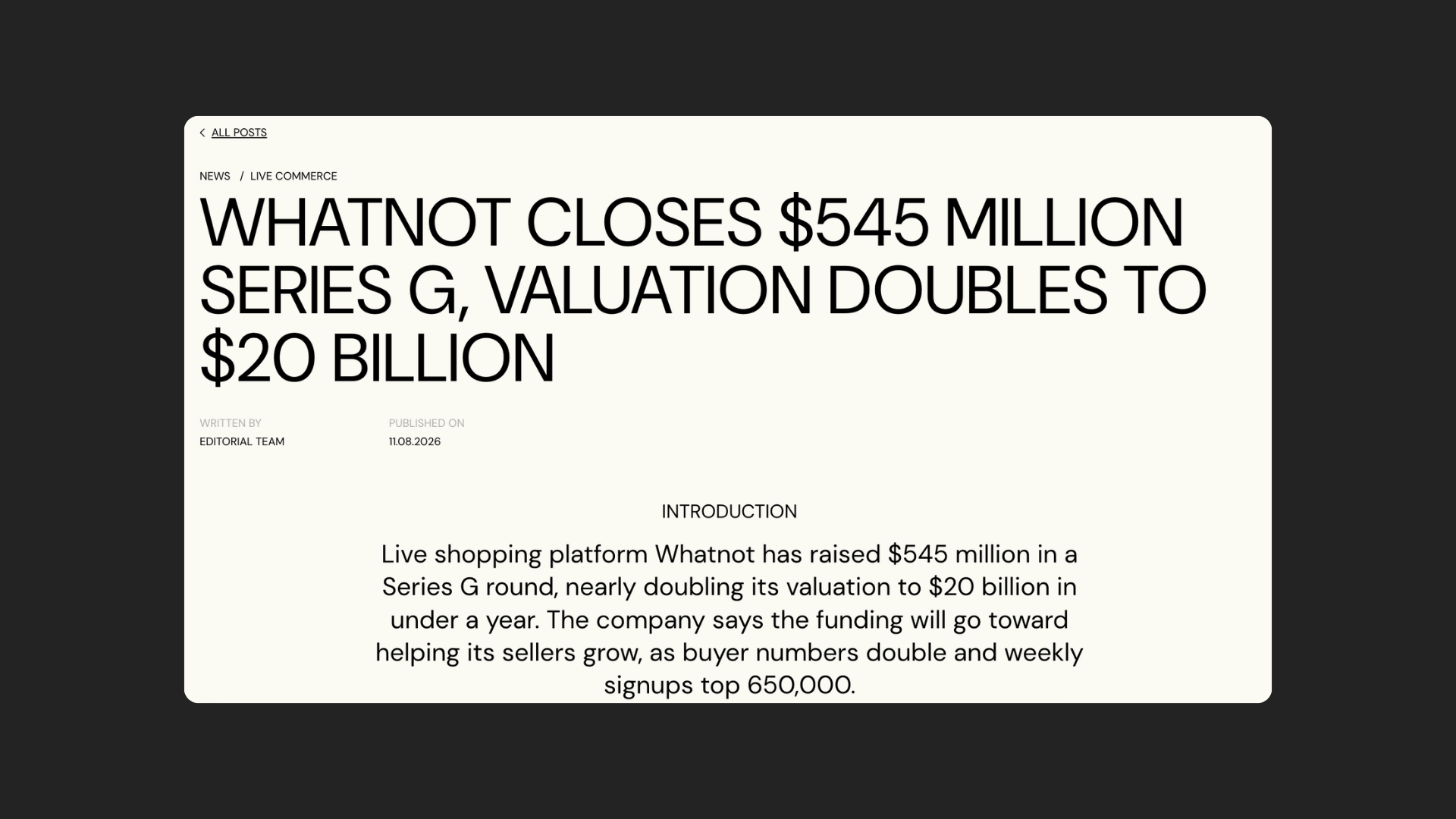
Whatnot raised $545 million at a $20 billion valuation this month, up from $11.5 billion less than a year ago.
That's real money behind live shopping, but it's a US and increasingly Asia-Pacific story so far. No Dutch or wider European platform has made a serious live-commerce push. Live shopping on Instagram and TikTok hasn't caught on in Europe the way it has elsewhere. If a European platform makes a real move on this in the next two quarters, revisit it. Right now, the budget is better spent elsewhere.
Other Shopify updates worth knowing
- DHL Express is now available directly from Shopify admin in the UK, Germany, France, Italy, and Spain.
- Shopify fixed the checkout bug where changing an order's shipping address didn't recalculate tax. It does now, automatically.
- Shop Campaigns performance is now available through Shopify's API, so it shows up in your own reporting tools instead of only Shopify's.
- Shopify Payments added a balance activity report with starting and ending balances, fees, and PDF export.
Other Klaviyo and Gorgias updates worth knowing
- Klaviyo rebuilt its flow processing engine. Flows 2.0 handles over 74,000 profiles a second, worth knowing before your next big send, not after one struggles.
- Klaviyo added OAuth 2.0 for Salesforce, so that integration stops breaking every time a password expires.
- Gorgias' AI Agent can now read images sent in chat, useful for damaged-product claims and shade-matching requests.
Talk to GoodKarma if any of this needs turning into an actual plan for your store.
Share on:


.png)
.png)