
.png)

Let’s talk growth.

POM Amsterdam has been making scarves and clothing with hand-painted prints since 2011. Unique items that make women feel beautiful and powerful. Together we are working on optimising their conversion rate and email marketing results through a brand-first approach.
POM Amsterdam is a Dutch fashion brand built on hand-painted prints and feminine, expressive design. Founded by sisters Liesbeth and Violet, the brand has grown from a small accessory line into a full range of colourful pieces, from suits to blouses to statement jackets. It has an international presence today, but its core audience is still Dutch.
POM has worked with GoodKarma for years, with a mature, well-established flow program already in place across the customer lifecycle.
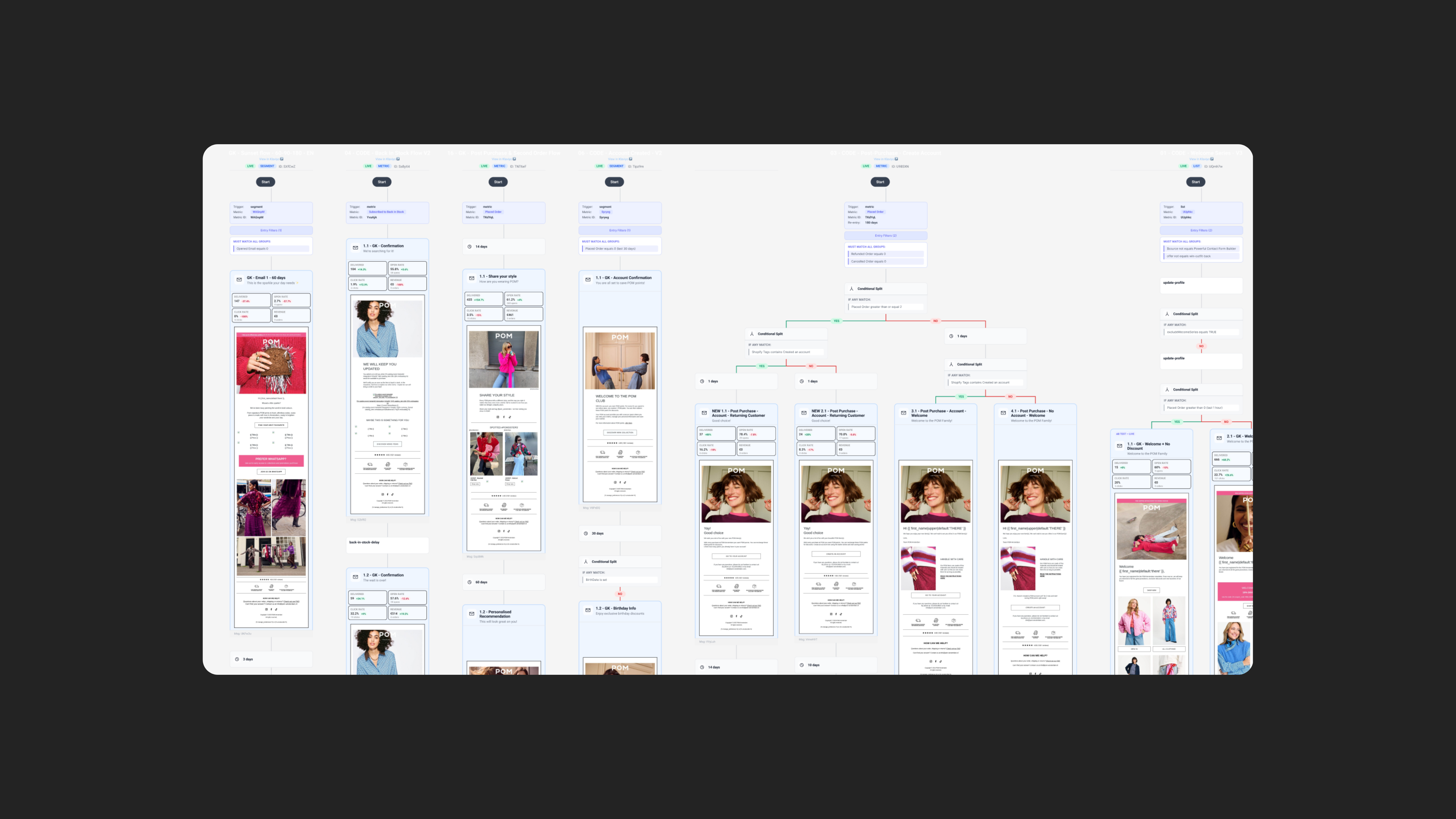
POM's Abandoned Cart, Abandoned Checkout, and Browse Abandonment flows were already personalized by customer type: we'd already split customers from prospects rather than sending one version of the email to everyone.
The question was what came next. Once the obvious split is in place, getting more revenue out of it means going a layer deeper. That means understanding where someone actually sits in their relationship with the brand, not just whether they're a customer or a prospect, and building the flow around that.
We used Klaviyo Personalization to segment POM's audience into four RFM tiers, based on recency, frequency, and monetary value. We then rebuilt the existing Abandoned Cart, Abandoned Checkout, and Browse Abandonment flows around those tiers, rather than around a single customer/prospect split.
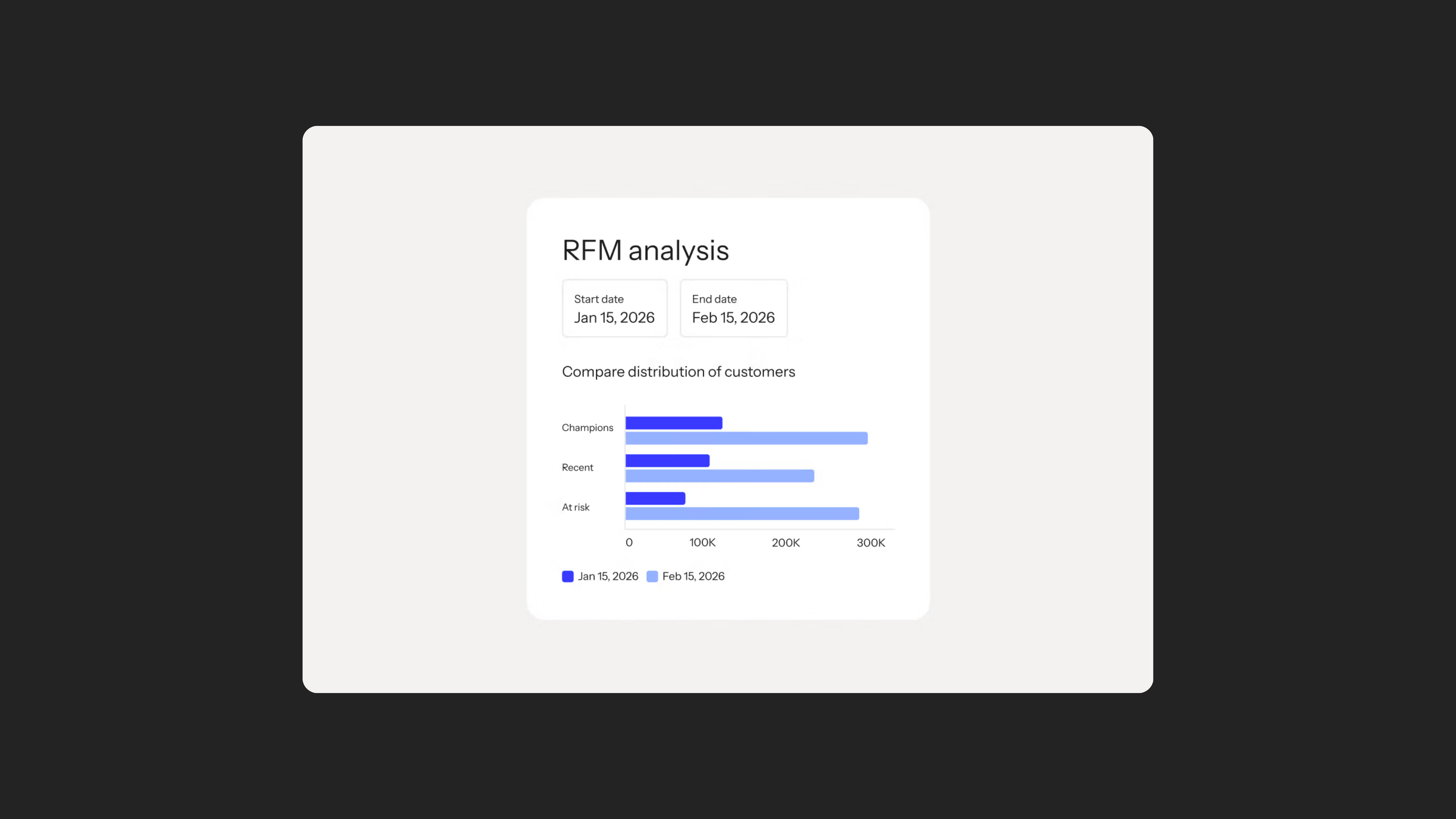
1. Four tiers. This was deliberately phase one: a first test of four RFM tiers, with further splitting planned within any group where the results proved meaningful enough to justify it. Each tier became its own branch inside the existing flows.
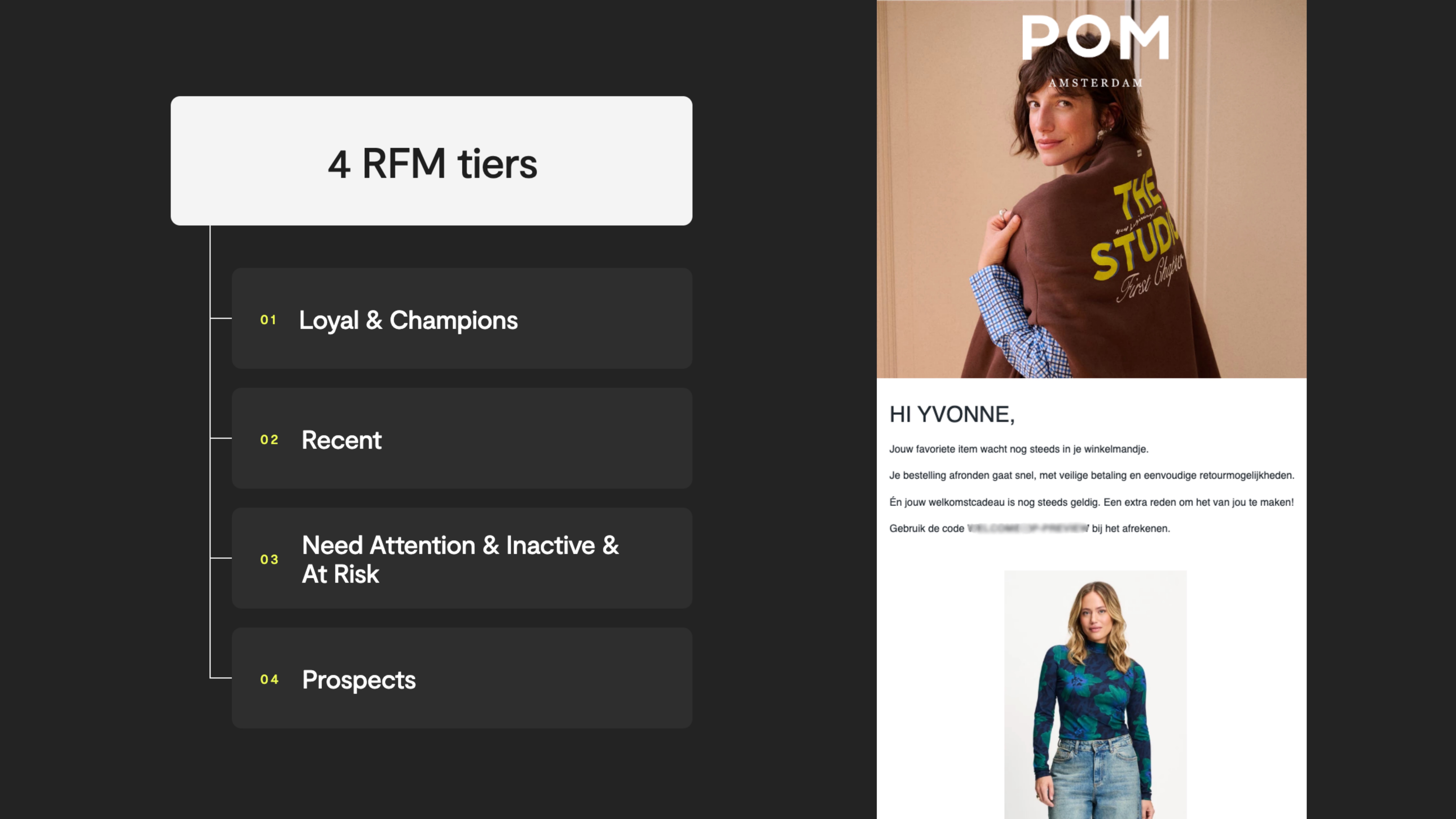
2. Tone matched to relationship. Loyal & Champions received confident, no-pressure copy: affirming their taste, no discount code, no urgency. Prospects received reassurance-led copy: trust and logistics language, since they're the only segment without an existing relationship to lean on.
3. Discounting used only where trust was lowest. For now, only Prospects received a discount, since price sensitivity and unfamiliarity are both highest in that segment.
4. Revenue per recipient tracked as the primary success metric, not total revenue. Total revenue moves with how many people enter a flow, which the flow itself doesn't control. Revenue per recipient isolates whether the message is doing a better job with the traffic it has. That's what this work was designed to change.
5. Message-level diagnosis, not just flow-level reporting. Rather than judging each flow as a single unit, we broke performance down by individual segment and by individual email in the sequence. That way, we can surface specific areas for improvement, covered below, instead of an average that would have hidden them.
This approach worked because it matched the message to the relationship. A loyal customer doesn't need convincing, so pushing a discount at them wastes an incentive and risks training them to wait for one. A brand-new visitor doesn't have trust built up yet, so reassurance does more work than urgency. Sending the same message to both was leaving revenue on the table in both directions.
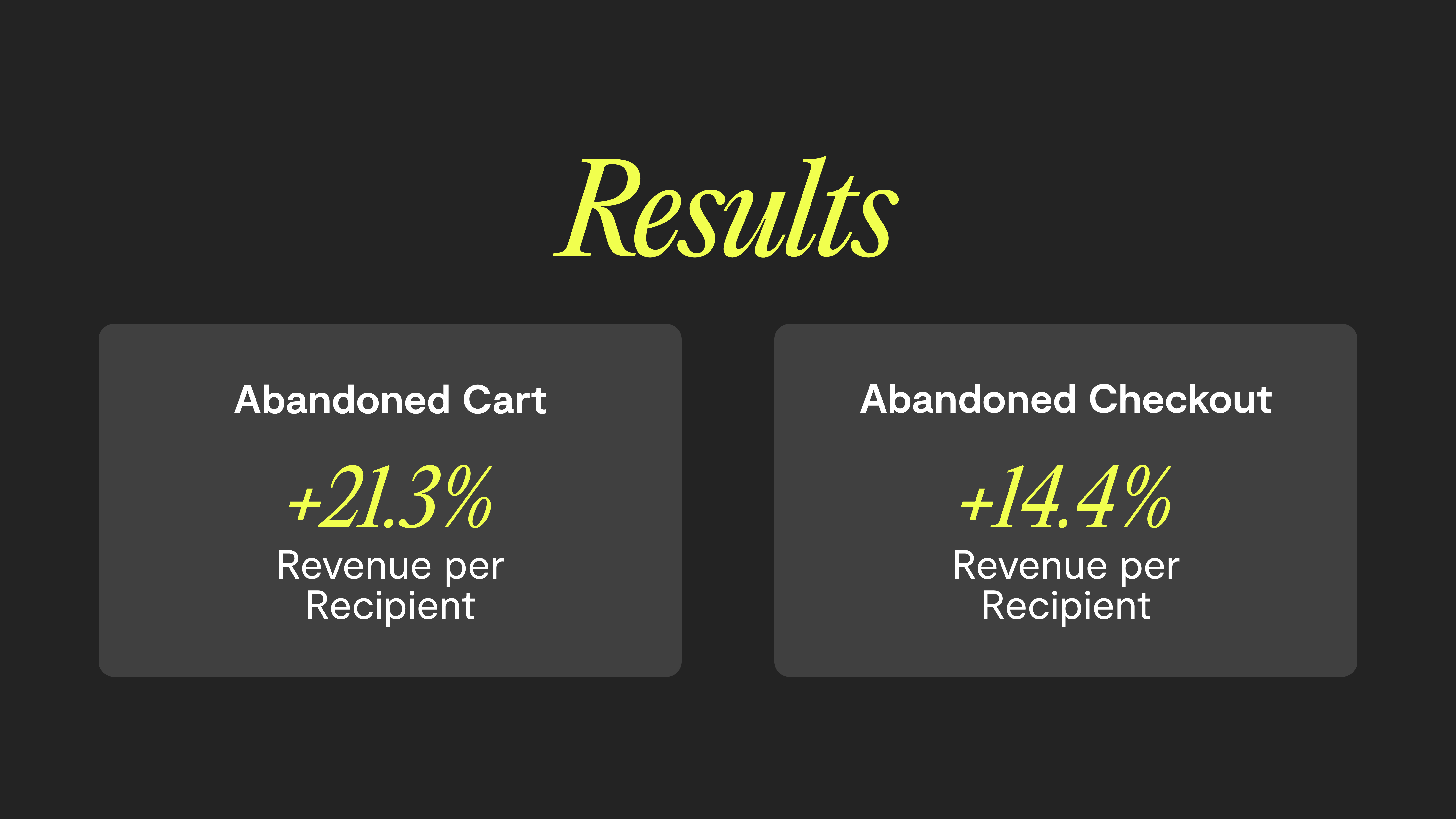
Abandoned Cart showed the strongest result. It was clean across every metric measured, comparing the live RFM period this year against the same period last year:
Revenue per recipient +21.3%
Conversion rate +18.4% (relative)
Abandoned Checkout also improved on revenue per recipient, comparing the live RFM period this year against the same period last year:
Revenue per recipient +14.4%
Conversion rate +0.9% (relative)
This is quick to set up in Klaviyo, and it can drive some great results.
Book a call with us if you want your flows optimised ahead of Q4.