
.png)
Let’s talk growth.
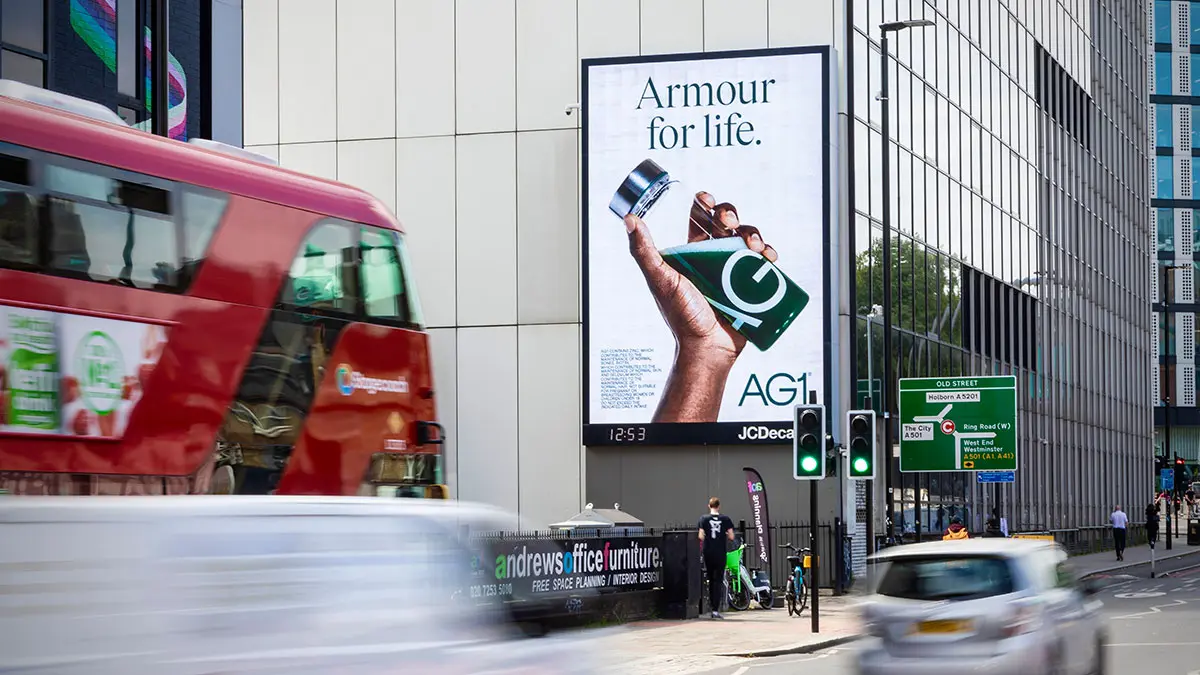
AG1 doesn't need an introduction. They came to us looking for an agency with deep understanding of local trends, behaviours, and culture and it’s not our first rodeo.
Back in 2022, we helped Stanley 1913 launch across Europe. Stanley's content had a distinctively American feeling so we started with creating fresh, locally resonant assets. The new creatives successfully drove the multiple times sold-out Quencher launch, complete with a waitlist of tens of thousands and remained the best performing assets for several months.
Now, we’re bringing the same data-driven, iterative process to AG1: creating and optimising ad creatives to fuel growth in the Netherlands.
.png)
TL;DR: Translating a global ad for a new market rarely works, even with a perfect translation, because there is a mismatch with the underlying cultural cues and nuances. The fix isn't just shooting more local content. It's using what already exists more deliberately: map existing footage against local moments, then re-edit it to feel native to each channel and each market, instead of just copy-pasting.
Most brands entering a new market fall into the same habit. They take ads running in their existing markets and roll them out in test markets with just a translated caption. But translations alone are not enough to localise; each market has its own attitudes, shopping behaviour and often a different lifestyle. Translated ads are simply not relatable enough.
Then the question often comes: should we shoot new, localised content or work with what we have? New content is often the right call, but with the right strategy and editing, you can get started with the existing content library. In this case study, we’ll dive deeper into how that looks in practice.
A global brand moving into a new market, say from the US into the Netherlands, carries a content library that gets the message right and the context wrong. The audience is different: different style and tone preferences, different everyday lifestyle, different shopping behaviour, different events, and not just the globally recognisable ones.
Translating the copy doesn't fix this. A brand can get every word right in Dutch and the content still won't feel local, because nothing about it was built with a Dutch audience's actual life in mind: how they shop, what they relate to day to day, what they find funny or serious or aspirational.
Reshooting for the local market can close that gap, but it's the expensive fix, and most brands reach for it before checking whether they already have something that works. Check the archive first. A piece built for the home market can still land in a new one if it's reconnected to something the local audience actually recognises: their routines, their shopping habits, their culture, not a version of the US calendar with subtitles.
AG1 is a global health and wellness brand built around a single daily supplement. They came to GoodKarma with the request to help them grow in the Benelux. Their content library looked like most fast-growing brands from the US: static and video assets shot with their home market in mind; none of it was built for the Dutch audience or calendar.
Instead of shooting new assets, we built concepts and copy around what was actually happening in the Dutch market that month, then found the hook that ties it to AG1 specifically. Two messaging anchors, "One Simple Scoop" and "Easy Addition to Your Routine," stayed fixed across every cycle. What changed every few weeks was which piece of existing footage got pulled, which moment it was tied to, and how it was framed.
We matched AG1's existing clips to marathon season, wintersport, and Hyrox NL. A general training clip became a race-week readiness ad, timed to marathon training. A routine and recovery clip became an ad about staying consistent while away, timed to the January wintersport period. Existing routine footage got reframed around race-day nerves and habit, timed to the Hyrox NL build-up. Three concepts, no new footage. Only the hook, the caption, and the moment it went live changed each time.
Thumbstop rate and full completion told the clearest story, since they show whether someone actually stopped and watched. One re-cut concept hit 43.7% thumbstop with 18.37% full completion. A second landed at 38.8% thumbstop with 16.83% completion.
.png)
The bigger point holds regardless of brand or archive. Most of what a market needs locally is already sitting in footage that's already been shot. The work isn't producing more of it. It's knowing what's happening in that market and how it responds, then going back through the archive with that in mind before reaching for a new production budget.