
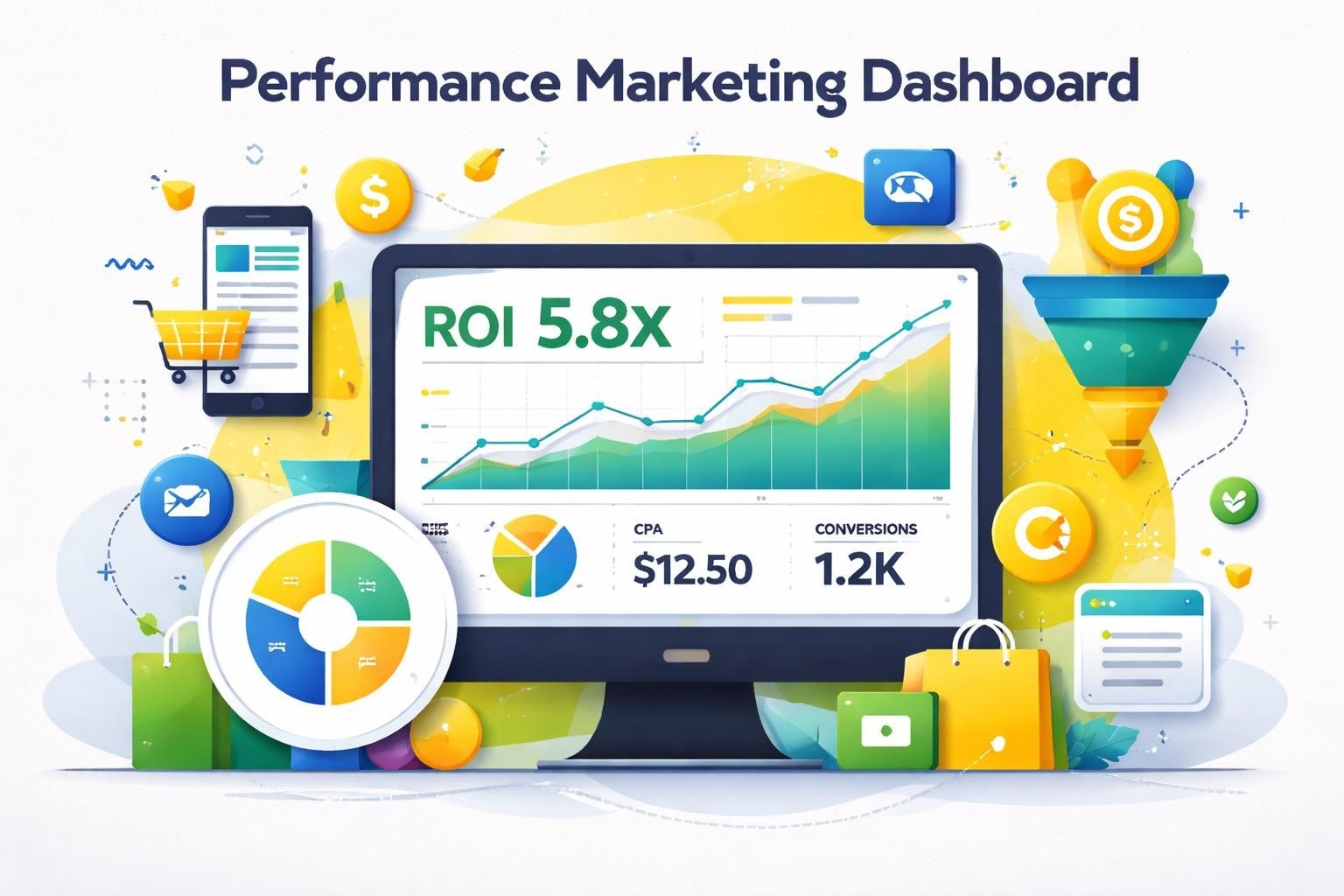
The ecommerce landscape in 2026 demands accountability from every marketing dollar spent. Performance based marketing companies have emerged as the solution for brands seeking measurable results rather than vanity metrics. Unlike traditional agencies that charge retainers regardless of outcomes, these specialized partners align their success directly with yours, charging based on actual conversions, sales, or specific key performance indicators. For fast-growing ecommerce brands in fashion, beauty, lifestyle, and home sectors, this model provides the financial flexibility and accountability needed to scale sustainably.
Understanding Performance Based Marketing Models
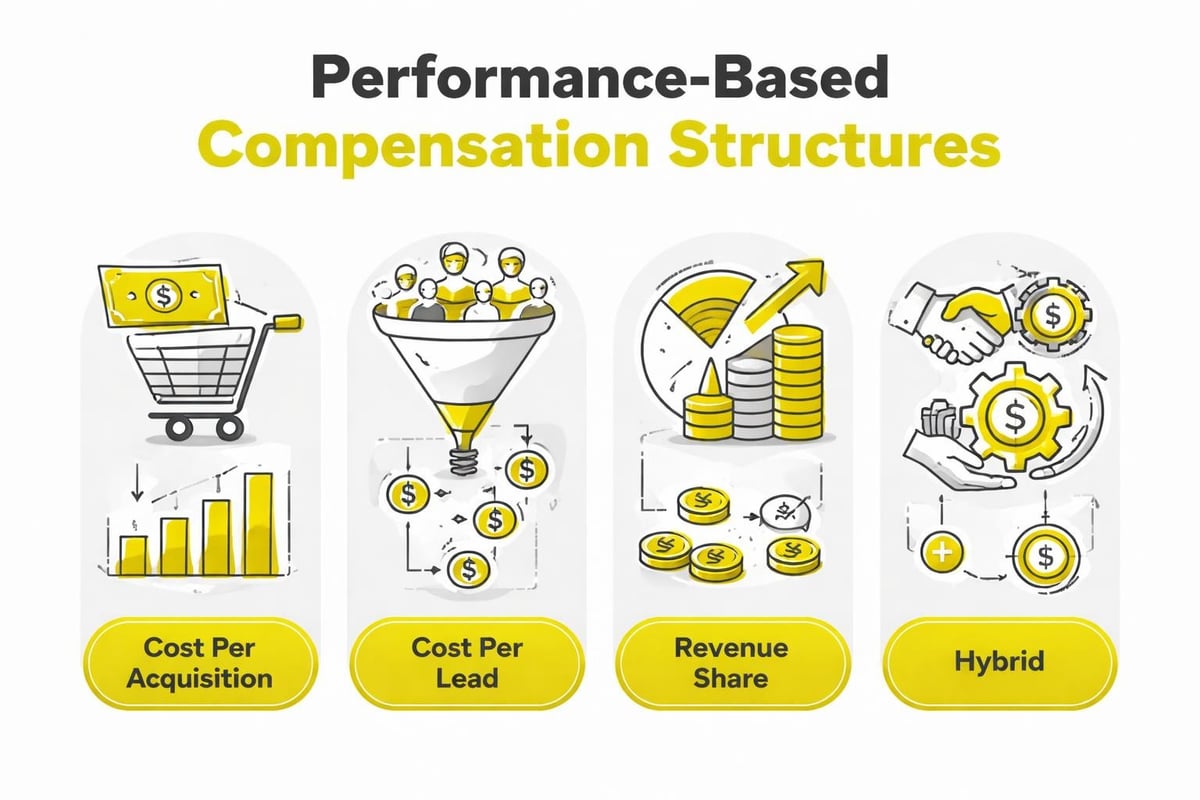
Performance based marketing companies operate on a fundamentally different compensation structure than traditional agencies. Instead of charging flat monthly fees, they receive payment when specific, pre-agreed actions occur. This creates immediate alignment between the agency's efforts and your business outcomes.
The most common payment structures include:
- Cost Per Acquisition (CPA): You pay only when a customer completes a purchase
- Cost Per Lead (CPL): Payment occurs when qualified leads are generated
- Revenue Share: The agency receives a percentage of sales they drive
- Hybrid Models: Combining reduced retainer fees with performance bonuses
According to recent market analysis, the performance marketing software market is projected to reach USD 30.9 billion by 2032, driven by data-driven advertising and AI advancements. This explosive growth reflects the increasing demand for accountable marketing investments.
Why Ecommerce Brands Choose Performance Models
The pay-for-results approach offers distinct advantages for growing brands. Cash flow remains protected because you're not committing large upfront investments before seeing returns. Beauty brand Glossier reportedly shifted 40% of their marketing budget to performance channels in 2025, reducing customer acquisition costs by 28% while maintaining brand positioning.
Risk mitigation stands as another compelling benefit. When agencies earn compensation based on actual results, they're incentivized to continuously optimize campaigns. A home goods brand working with a performance agency saw their return on ad spend (ROAS) improve from 3.2x to 5.8x within six months as the agency refined targeting and creative strategies.
Core Services Delivered by Performance Based Marketing Companies
Performance based marketing companies typically offer a comprehensive suite of services designed to drive measurable outcomes. The most effective partners understand that successful ecommerce growth requires balancing immediate conversions with long-term brand building.
Paid Social Advertising
Meta, TikTok, and Pinterest represent primary channels for performance campaigns. These platforms offer sophisticated targeting capabilities that allow brands to reach specific customer segments based on demographics, behaviors, and interests.
Step-by-step process for Meta performance campaigns:
- Audience research and segmentation: Analyze customer data to identify high-value segments
- Creative development: Design multiple ad variations testing different messaging angles
- Campaign structure setup: Build campaigns with proper attribution tracking and conversion events
- Launch and monitoring: Deploy campaigns with daily budget optimization
- Real-time optimization: Adjust targeting, creative, and budgets based on performance data
- Scaling: Increase investment in winning combinations while eliminating underperformers
Fashion brand Reformation increased their Meta ROAS from 4.1x to 6.7x by implementing sequential testing of creative concepts, with their performance agency testing 47 different ad variations over three months.
Search Engine Marketing
Google Ads and Shopping campaigns remain essential for capturing high-intent traffic. Performance based marketing companies excel at managing these channels because success directly correlates with conversion tracking accuracy.
| Channel | Average ROAS (Fashion/Beauty) | Conversion Window | Best For |
|---|---|---|---|
| Google Shopping | 5.2x - 7.8x | 7-14 days | Product discovery |
| Google Search | 4.5x - 6.3x | 3-7 days | High-intent keywords |
| Display Remarketing | 3.1x - 4.9x | 14-30 days | Cart abandonment |
| YouTube Pre-roll | 2.8x - 4.2x | 21-45 days | Brand awareness + conversion |
Skincare brand The Ordinary allocated 35% of their 2025 performance budget to Google Shopping, achieving a 6.9x ROAS by optimizing product feed quality and bidding strategies.
Email and SMS Marketing
Owned channels provide the highest ROI potential for established ecommerce brands. Performance agencies increasingly integrate Klaviyo and similar platforms into their service offerings, creating automated flows that convert subscribers into repeat customers.
High-performing flow types and benchmarks:
- Welcome series: 8-12% conversion rate, average order value 1.3x higher than site average
- Abandoned cart: 15-18% recovery rate, generating 10-15% of total revenue
- Post-purchase: 25-30% repeat purchase rate within 90 days
- Browse abandonment: 6-8% conversion rate, capturing lost opportunity
Wellness brand Goop generated 32% of their total revenue from email marketing in 2025, with their performance agency implementing behavioral triggers that delivered personalized product recommendations based on browsing patterns.
Selecting the Right Performance Based Marketing Partner
Choosing among performance based marketing companies requires careful evaluation beyond surface-level promises. The partnership quality directly impacts your brand's growth trajectory and profitability.
Essential Evaluation Criteria
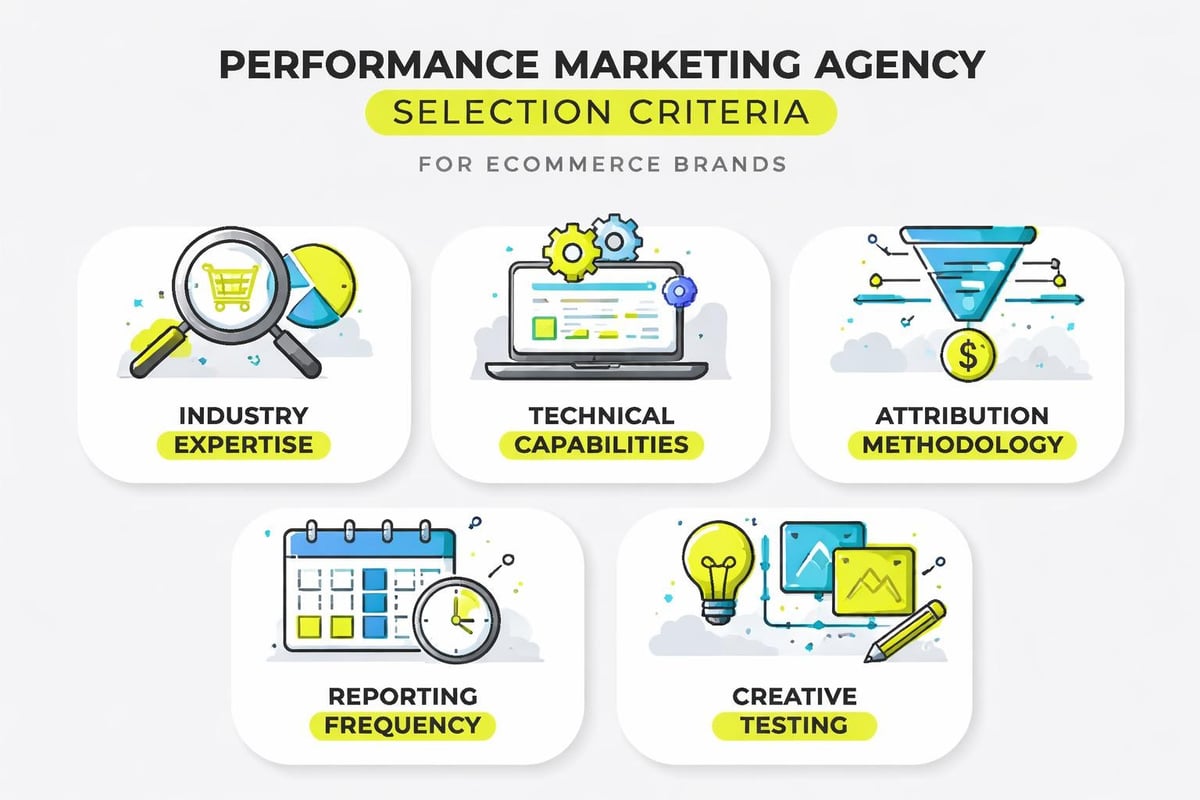
Start by examining the agency's industry expertise. Agencies specializing in ecommerce understand the nuances of cart abandonment, seasonal trends, and customer lifetime value optimization. Request case studies from brands in similar sectors and ask specific questions about results achieved.
Key questions to ask potential partners:
- What is your average ROAS across clients in our industry vertical?
- How do you approach the balance between brand building and direct response?
- What attribution model do you use for performance tracking?
- How frequently do you report on campaign performance?
- What is your process for creative testing and iteration?
- Can you provide references from current clients?
Technical capabilities matter significantly. The latest performance marketing trends emphasize privacy-first marketing and cookieless targeting. Your chosen agency should demonstrate expertise in first-party data collection, server-side tracking implementation, and conversion API setup.
Understanding Attribution and Reporting
Transparent attribution methodology prevents disputes about which conversions the agency should receive credit for. Establish clear definitions upfront about attribution windows, multi-touch attribution models, and how organic and paid channels interact.
| Attribution Model | Best For | Considerations |
|---|---|---|
| Last-Click | Direct response campaigns | Undervalues upper-funnel touchpoints |
| First-Click | Brand awareness focus | Ignores conversion nurturing |
| Linear | Balanced customer journeys | Equal weight may not reflect reality |
| Time Decay | Longer consideration cycles | Complex to implement correctly |
| Data-Driven | Sophisticated tracking setup | Requires sufficient conversion volume |
Beauty brand Fenty Beauty implemented data-driven attribution in 2025, discovering that their Pinterest campaigns contributed 23% more value than last-click attribution suggested, leading to a strategic reallocation of their performance budget.
Maximizing Results with Performance Marketing Strategies
Working effectively with performance based marketing companies requires active collaboration rather than passive delegation. The most successful partnerships involve regular communication, shared data access, and aligned objectives.
Setting Performance Benchmarks
Establish realistic targets based on industry standards and your historical data. Fashion and apparel brands typically achieve 4-6x ROAS on Meta platforms, while beauty and cosmetics brands often reach 5-8x due to higher repeat purchase rates. Home and living products generally see 3-5x ROAS with longer consideration cycles.
Baseline metrics to track monthly:
- Return on Ad Spend (ROAS)
- Customer Acquisition Cost (CAC)
- Customer Lifetime Value (CLV)
- CAC to CLV ratio (target: 1:3 or better)
- Contribution margin after marketing costs
- Repeat purchase rate
- Average order value (AOV)
Health and wellness brand Vital Proteins maintained a CAC to CLV ratio of 1:4.2 throughout 2025, enabling aggressive scaling while maintaining profitability through their performance partnership.
Creative Strategy and Testing
The intersection of brand and performance represents where exceptional results occur. Many performance based marketing companies focus exclusively on direct response tactics, potentially damaging brand equity. The most effective agencies understand that strong creative executes both functions simultaneously.
Implement structured creative testing frameworks:
- Concept development: Generate 5-7 distinct messaging angles aligned with brand values
- Initial testing: Launch each concept with equal budget allocation ($500-1000 per variant)
- Early analysis: Review performance after 1000 impressions per ad
- Iteration: Refine winning concepts with variations in format, headlines, and calls-to-action
- Scaling: Increase budget on proven winners while maintaining testing allocation (70/30 split)
- Refresh cycle: Introduce new concepts every 4-6 weeks to combat ad fatigue
Fashion brand Everlane tested user-generated content against professionally shot product photography in their 2025 campaigns, discovering that UGC outperformed by 34% in terms of conversion rate while maintaining brand consistency through careful curation.
Advanced Performance Marketing Tactics for 2026
The performance marketing landscape continues evolving rapidly. Staying current with emerging strategies provides competitive advantages in crowded markets. According to key performance marketing trends for 2025, the creator economy and influencer partnerships now dominate performance budgets.
Creator and Influencer Performance Partnerships
The creator economy has fundamentally transformed performance marketing. Ad spend in the creator economy now dwarfs traditional media, with ecommerce brands leading this shift. Rather than paying fixed fees for influencer posts, performance structures compensate creators based on actual sales driven.
Implementing affiliate partnerships with creators:
- Provide unique discount codes or tracking links for attribution
- Offer commission structures ranging from 10-25% depending on product margins
- Establish minimum content quality standards maintaining brand guidelines
- Create tiered programs rewarding top-performing creators with higher rates
- Supply creators with product, talking points, and performance data
Beauty brand Rare Beauty generated 41% of new customer acquisitions through creator partnerships in 2025, paying commissions only on verified sales while maintaining strict brand aesthetic standards across all content.
First-Party Data and Retention Marketing
With third-party cookies disappearing, performance based marketing companies increasingly focus on first-party data collection and owned channel optimization. Brands capturing email addresses and SMS consent before initial purchase achieve 2.3x higher customer lifetime values.
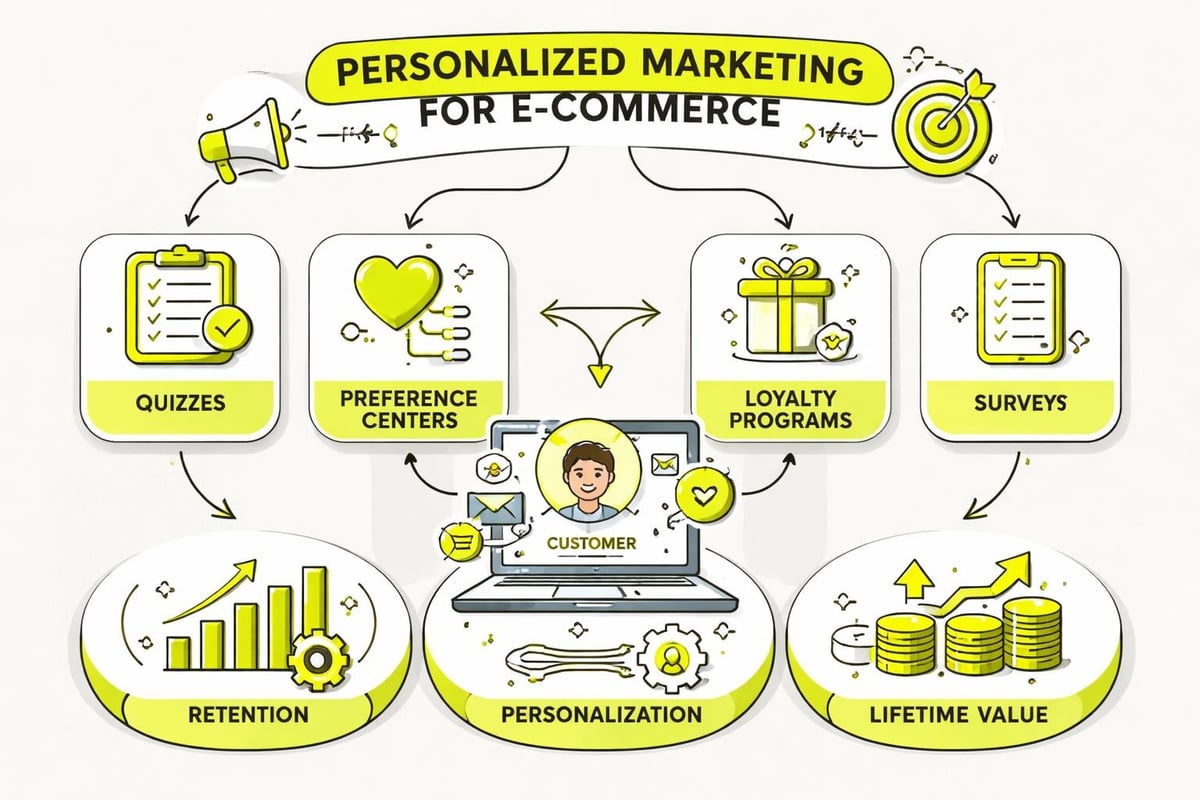
Zero-party data collection strategies:
- Quiz funnels that gather preference information while recommending products
- Loyalty programs offering points for profile completion
- Preference centers allowing customers to specify communication preferences
- Post-purchase surveys collecting feedback and additional data
- Birthday and anniversary collection for personalized promotions
Home goods brand Parachute implemented a product recommendation quiz that converted at 18.7%, collecting preference data that powered personalized email campaigns achieving 42% higher conversion rates than generic sends.
AI-Powered Campaign Optimization
Artificial intelligence increasingly automates performance marketing optimization. Platforms like Meta's Advantage+ and Google's Performance Max use machine learning to automatically adjust targeting, bidding, and creative delivery based on real-time performance signals.
Performance based marketing companies leverage these tools while maintaining strategic oversight. Lifestyle brand Herschel Supply increased efficiency by 29% using AI-powered bidding strategies while their agency managed creative strategy, brand positioning, and overall budget allocation across channels.
Building Internal Capabilities Alongside Agency Partnerships
While performance based marketing companies provide expertise and execution capacity, developing internal capabilities creates sustainable competitive advantages. The most successful ecommerce brands view agency relationships as collaborative rather than outsourced.
Data Infrastructure and Analytics
Invest in robust tracking infrastructure before launching performance campaigns. Implement server-side tracking, conversion APIs, and enhanced ecommerce measurement to ensure accurate attribution even as browser-based tracking degrades.
Essential tracking implementation checklist:
- Google Analytics 4 with proper ecommerce events configured
- Facebook Conversions API (CAPI) for iOS 14+ tracking accuracy
- TikTok Events API for improved attribution
- Pinterest API for Conversions
- Customer data platform (CDP) unifying cross-channel data
- Data warehouse for advanced analysis and modeling
Fashion brand Madewell invested $47,000 in tracking infrastructure upgrades in early 2025, enabling their performance agency to achieve 23% more accurate attribution and optimize campaigns with greater precision.
Creative Production Capacity
The volume of creative assets required for effective performance marketing often surprises brands. Top-performing campaigns test dozens of variations monthly, requiring substantial production capacity. Establishing internal creative workflows or relationships with agile production partners accelerates testing velocity.
Beauty brand Glossier maintained a content library of 200+ approved assets in 2025, enabling their performance marketing agency to rapidly deploy new combinations and iterations without bottlenecks in the approval process.
Measuring Long-Term Performance Marketing Success
Short-term ROAS provides immediate feedback but doesn't capture complete value. Comprehensive measurement frameworks evaluate performance marketing impact across multiple dimensions and timeframes.
Incrementality Testing
Understanding true incremental impact requires structured testing methodologies. Geo-holdout tests, where campaigns run in some regions but not others, reveal how much performance marketing drives sales beyond what would occur organically.
Implementing basic incrementality testing:
- Select comparable geographic regions with similar demographics and purchase patterns
- Continue performance campaigns in test regions
- Pause campaigns in holdout regions for 2-4 weeks
- Measure sales differences between test and holdout groups
- Calculate incremental revenue attributable to performance marketing
- Adjust attribution models and efficiency targets based on findings
Health supplement brand Athletic Greens conducted quarterly incrementality tests in 2025, discovering their actual incremental ROAS was 4.8x compared to the 6.2x shown in platform attribution, leading to more conservative efficiency targets.
Customer Cohort Analysis
Analyzing customer cohorts acquired through different channels reveals long-term value patterns. Customers acquired through branded search often have higher lifetime values than those from prospecting campaigns, yet both matter for sustainable growth.
| Acquisition Channel | First Purchase AOV | 90-Day Repeat Rate | 12-Month LTV | CAC Efficiency |
|---|---|---|---|---|
| Branded Search | $87 | 34% | $312 | 1:8.2 |
| Non-Brand Search | $73 | 22% | $198 | 1:4.1 |
| Meta Prospecting | $69 | 19% | $176 | 1:3.4 |
| TikTok | $64 | 17% | $152 | 1:2.8 |
| $71 | 21% | $189 | 1:3.7 |
Lifestyle brand Jenni Kayne optimized their channel mix in 2025 based on cohort analysis, discovering that Meta-acquired customers, while having lower initial purchase values, subscribed to their rental program at 2.4x the rate of search customers, dramatically improving lifetime values.
Common Pitfalls and How to Avoid Them
Even experienced ecommerce brands make mistakes when working with performance based marketing companies. Understanding common pitfalls helps you structure more successful partnerships.
Misaligned Incentives
Pure CPA models can incentivize agencies to focus exclusively on low-funnel conversions, neglecting brand building and customer quality. A wellness brand discovered their performance agency optimized entirely for first-time purchases, resulting in a 31% decrease in repeat purchase rates over six months.
Solutions for incentive alignment:
- Include customer lifetime value in compensation structures
- Set minimum brand health metrics (aided awareness, consideration)
- Require channel diversification rather than over-indexing on cheapest conversions
- Establish quality thresholds for customer acquisition (minimum AOV, demographic fit)
Inadequate Attribution Windows
Performance marketing drives impact beyond immediate last-click conversions. Fashion purchases often involve multiple touchpoints over 14-30 days. Setting attribution windows too short undervalues performance marketing contribution.
Home decor brand Article extended their attribution window from 7 to 30 days in 2025, increasing credited conversions by 38% and enabling more aggressive investment in upper-funnel awareness campaigns that drove eventual purchases.
Creative Stagnation
Performance optimization sometimes leads agencies to repeatedly use winning creative, causing ad fatigue and declining performance. Beauty brand Drunk Elephant saw their Meta ROAS decline from 6.2x to 3.8x over four months when their agency failed to refresh creative despite increasing frequency metrics.
Implement mandatory creative refresh cycles every 6-8 weeks, requiring new concepts even when current assets perform adequately. This prevents performance cliffs and maintains audience engagement.
Industry-Specific Performance Marketing Approaches
Different ecommerce verticals require tailored performance marketing strategies. What works for fashion brands may fail for health supplements or home goods.
Fashion and Apparel
Visual storytelling drives fashion performance. User-generated content, lifestyle imagery, and influencer partnerships typically outperform product-only shots. Dynamic product ads showcasing items customers viewed or added to cart convert particularly well, with abandonment campaigns achieving 15-22% conversion rates.
Sustainable fashion brand Reformation allocated 45% of their 2025 performance budget to creator partnerships and UGC, achieving a blended 5.9x ROAS while strengthening brand positioning around authenticity.
Beauty and Cosmetics
Education-focused content performs exceptionally well in beauty. Tutorial videos, before-and-after demonstrations, and ingredient explanations build trust while driving conversions. Subscription models and loyalty programs significantly increase customer lifetime values.
Clean beauty brand Beautycounter generated 38% of revenue from subscription customers in 2025, with their performance agency optimizing acquisition campaigns specifically for subscribers rather than one-time purchasers, improving long-term unit economics.
Health and Wellness
Regulatory compliance adds complexity to health and wellness performance marketing. Claims require substantiation, and platforms restrict certain targeting categories. Educational content marketing combined with performance amplification provides compliant pathways to growth.
Supplement brand Ritual maintained strict compliance standards while achieving 4.7x ROAS through educational video content explaining ingredient benefits without making therapeutic claims, distributed through performance channels.
Home and Living
Longer consideration cycles characterize home goods purchases. Multi-touch attribution and extended attribution windows capture true performance impact. Seasonal trends strongly influence performance, requiring budget flexibility and inventory coordination.
Home goods brand Burrow achieved their highest quarterly performance in Q4 2025 by aligning inventory, performance budgets, and promotional calendars, scaling spend 340% during peak holiday demand while maintaining 4.2x ROAS through supply chain coordination with their performance agency.
Performance based marketing companies offer ecommerce brands accountability, efficiency, and scalable growth when partnerships are structured thoughtfully. By understanding compensation models, setting clear expectations, implementing robust tracking, and maintaining the crucial balance between brand building and direct response, you position your brand for sustainable success. At Good Karma Agency, we specialize in this exact balance-combining data-driven performance marketing across Meta, TikTok, Google, and Pinterest with creative excellence that strengthens rather than compromises your brand identity, helping fast-growing ecommerce brands achieve measurable results without sacrificing long-term brand equity.


