
The digital marketing landscape is transforming at an unprecedented pace. Is your brand prepared to make a lasting impression in 2026?
This article reveals seven cutting-edge marketing websites design ideas that will shape the future for brands eager to lead the way. Whether you are a marketer, designer, or business owner, you will find practical inspiration to elevate your web presence and stay ahead of the curve.
Get ready to discover bold trends, from interactive storytelling to AI-powered personalization, all illustrated with real-world brand examples and proven data. Experience the strategies that spark engagement, drive growth, and set you apart.
Explore how immersive visuals, seamless mobile experiences, and ethical design can turn your website into a powerful marketing asset. Each idea comes with actionable steps, so you can confidently implement the best in marketing websites design for 2026.
The Future of Marketing Website Design: 2026 Trends & User Expectations
The Shift Toward Experience-First Design
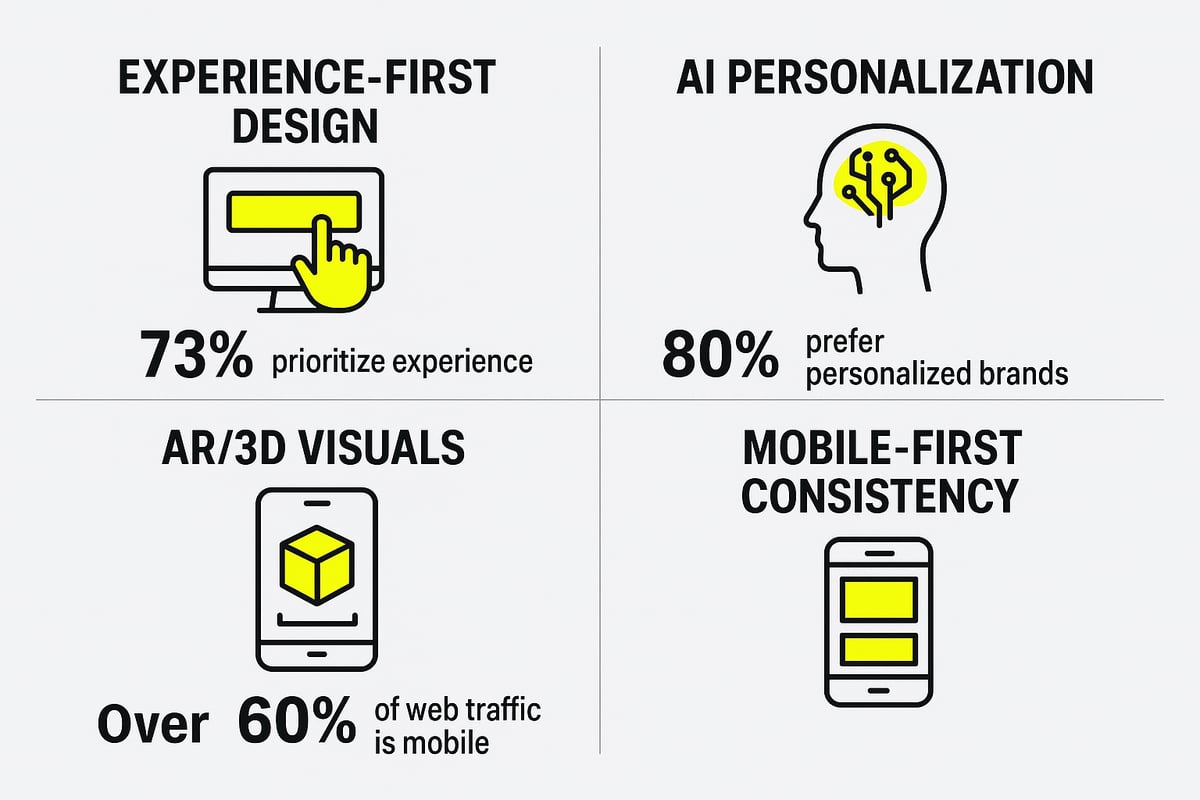
Today’s consumers expect more than just information from marketing websites design. They seek seamless, engaging, and memorable experiences that guide them from discovery to action. According to PwC, 73% of consumers say experience is a key factor in their purchasing decisions.
Brands are moving from static pages to dynamic, interactive layouts. For example, Nike’s product launches often use interactive storytelling and immersive campaigns to capture attention and drive engagement.
To future-proof your marketing websites design:
- Map out user journeys with interactive elements at key touchpoints
- Replace static sections with dynamic, scroll-based content
- Prioritize accessibility and inclusivity for all users
Focusing on experience-first principles ensures every visitor feels valued and understood.
Personalization, AI, and Data-Driven UX
Artificial intelligence is revolutionizing marketing websites design by enabling real-time personalization. Brands now deliver dynamic content that adapts to user behavior, location, and preferences. Sephora’s AI-powered quizzes and tailored recommendations are prime examples, boosting engagement and conversions by offering a personalized journey.
To implement this:
- Integrate AI tools for data capture and analysis
- Use dynamic content blocks that respond to user signals
- Maintain transparency about data usage to build trust
Explore how AI in Ecommerce Design can transform your site’s personalization strategy and drive measurable results. Privacy and consent management should always be central to your approach, ensuring users feel secure while benefiting from tailored experiences.
Visual Innovation: AR, 3D, and Micro-Interactions
Visual technology is rapidly reshaping marketing websites design. Augmented Reality and 3D visuals now allow users to explore products virtually, increasing confidence and reducing returns. IKEA’s AR room planner lets shoppers visualize furniture in their own spaces, making the buying process interactive and fun.
Enhance your site by:
- Adding micro-interactions to guide and delight users
- Using high-quality animations and AR for product exploration
- Ensuring fast load times to keep visitors engaged
Micro-interactions, like subtle button animations or hover effects, create a sense of delight and reinforce your brand’s personality. Strong visuals, paired with top performance, elevate both perception and results.
Mobile-First & Omnichannel Consistency
With over 60% of web traffic coming from mobile devices (Statista, 2024), marketing websites design must prioritize mobile optimization and responsive layouts. Users expect a consistent experience whether they are browsing on a phone, tablet, or desktop.
Brands like Glossier excel by delivering unified journeys across Instagram, their website, and mobile apps. To achieve this:
- Design mobile-first layouts that adapt to all screens
- Test navigation and interactions on multiple devices
- Integrate voice search and conversational interfaces for accessibility
Omnichannel consistency ensures users enjoy a seamless experience wherever they interact with your brand, driving loyalty and higher conversion rates.
7 Inspiring Marketing Websites Design Ideas for 2026
The future of marketing websites design is all about experience, innovation, and measurable impact. To inspire your next redesign or campaign, explore these seven actionable ideas, each proven to boost engagement and conversion. From immersive storytelling to sustainable design, these trends will help your brand stand out in 2026.

1. Immersive Storytelling with Scroll-Based Animation
Modern marketing websites design thrives on interactive storytelling. Scroll-based animations, parallax effects, and dynamic transitions transform static content into captivating narratives. For example, Apple's product pages use scroll-triggered animations that unfold the story as users explore, leading to deeper engagement.
To implement this trend:
- Map your brand's core messages into a compelling story arc.
- Storyboard the user journey, highlighting key moments to animate.
- Use tools like GSAP, Lottie, and Webflow Animations for smooth, responsive transitions.
- Test performance to ensure fast load times and accessibility.
According to HubSpot, sites that use interactive storytelling see session times increase by up to 30 percent. Fashion brands like Burberry employ immersive storytelling to showcase collections, creating emotional connections that drive loyalty.
Balance animation and usability. Avoid overwhelming users with effects, focusing on clarity and brand reinforcement. For more inspiration, see how Colourful Rebel leverages interactive storytelling in web design to make its marketing websites design unforgettable.
2. AI-Powered Personalization Engines
Personalization is at the heart of effective marketing websites design. AI and machine learning now deliver tailored content, product recommendations, and dynamic CTAs in real time. Retailers like ASOS deploy Netflix-style recommendation engines, adapting the site experience to each visitor.
How to get started:
- Integrate AI platforms such as Dynamic Yield or Algolia.
- Set up robust user data capture with clear consent mechanisms.
- Test various personalization scenarios, starting with segmented content blocks.
- Monitor results and continually refine your models.
Data shows that personalized marketing websites design can boost conversion rates by up to 202 percent (Econsultancy). Beauty leaders like Sephora personalize landing pages, offers, and product suggestions, seeing higher engagement and repeat purchases.
Privacy is crucial. Be transparent about data use and provide easy opt-outs. Begin with simple segmentation, then expand as you gather insights.
3. AR and 3D Product Visualization
Augmented reality and 3D visuals are transforming marketing websites design by letting users interact with products virtually. IKEA’s AR room planner and Warby Parker’s virtual try-on empower customers to visualize items in their own space, reducing uncertainty and returns.
Implement AR/3D with these steps:
- Select a framework (Shopify AR, Three.js) that fits your stack.
- Develop optimized, mobile-friendly 3D models.
- Embed interactive elements with clear calls to action.
- Pilot with hero products before scaling across your catalog.
Google reports that 61 percent of shoppers prefer retailers offering AR experiences. Home, fashion, and lifestyle brands see increased average order values and fewer cart abandonments after adding AR features.
Combine AR and user-generated content for social proof. Encourage customers to share their virtual experiences, amplifying reach and trust.
4. Bold Color Schemes and Maximalist Visual Identity
Standing out in 2026 means adopting expressive, vibrant branding. Marketing websites design is shifting toward bold color palettes and maximalist visuals that break through digital clutter. Glossier’s soft pastels and ColourPop’s striking hues are memorable and instantly recognizable.
To execute this trend:
- Develop a distinct color story that aligns with your brand’s values.
- Test color combinations for accessibility and visual impact.
- Apply your palette consistently across all digital touchpoints.
- Leverage color psychology to enhance emotional resonance.
Studies from the University of Loyola show color can increase brand recognition by up to 80 percent. Many DTC fashion and lifestyle brands are leading this movement, using color as a tool to boost recall and foster community.
Ensure your marketing websites design remains accessible by checking contrast ratios and considering users with color vision deficiencies.
5. Micro-Interactions and Gamification
Small-scale animations and gamified features are essential for engaging today’s audiences. Micro-interactions, such as animated buttons or dynamic feedback on forms, make marketing websites design feel responsive and alive. Gamification, like quizzes or rewards, increases retention and repeat visits.
Get started with these steps:
- Identify key user touchpoints, such as sign-ups and product selectors.
- Design simple micro-interactions that reinforce your brand’s personality.
- Pilot interactive onboarding or loyalty programs.
- Test usability to ensure features enhance rather than distract.
Nike’s interactive quizzes and loyalty programs set the standard. According to Badgeville, gamified websites see engagement rates rise by 47 percent. Use micro-interactions to guide users, celebrate actions, and make each visit feel rewarding.
Start small. Even a single interactive element can make your marketing websites design more memorable and fun.
6. Conversational Interfaces and Voice Search Optimization
Conversational UIs, including chatbots and voice assistants, are reshaping how users navigate marketing websites design. Brands like L’Oreal use AI chatbots to recommend products, answer questions, and book appointments instantly.
To implement:
- Integrate chatbot platforms such as Drift or Intercom.
- Optimize site content for voice search, using natural language and FAQs.
- Monitor user interactions and gather feedback for improvement.
ComScore predicts that 50 percent of all searches will be voice-based by 2026. Health and wellness brands are already leveraging chatbots for personalized coaching and support, reducing friction and boosting accessibility.
Update your product and FAQ pages with conversational language. This ensures your marketing websites design is ready for the next wave of user expectations.
7. Sustainable and Ethical Design Practices
Sustainability is now a core expectation in marketing websites design. Brands like Patagonia and FÉST prioritize eco-friendly hosting, minimalistic code, and transparent storytelling about ethical practices.
Action steps:
- Audit your site for performance and energy consumption.
- Choose green hosting providers and optimize assets for speed.
- Add sustainability badges and publish transparency reports.
- Use storytelling to communicate your ethical commitments.
First Insight reports that 73 percent of Gen Z prefer buying from sustainable brands. Google’s Core Web Vitals also reward efficient, lightweight sites with better SEO.
Highlight your sustainability efforts throughout your marketing websites design. This builds trust, attracts conscious consumers, and sets your brand apart in a crowded market.
Step-by-Step Process: How to Implement 2026’s Top Marketing Website Design Trends
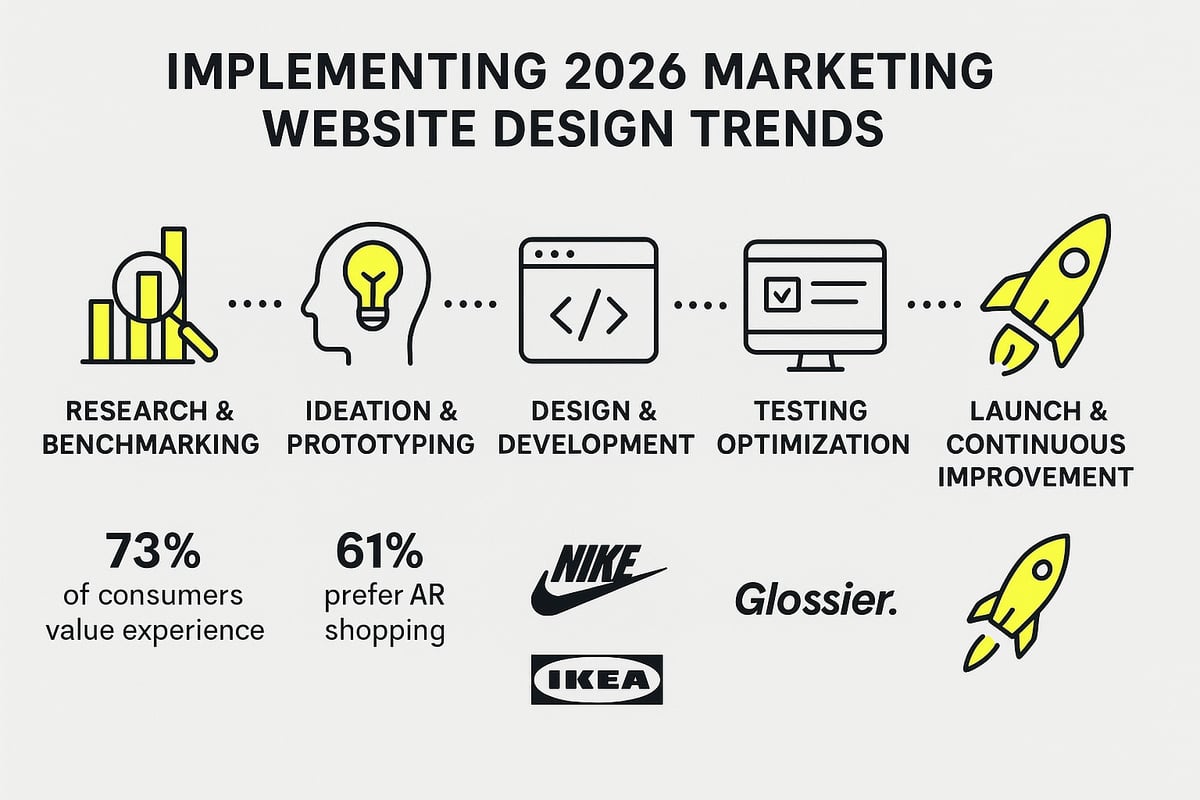
Transforming your marketing websites design for 2026 starts with a structured, actionable approach. Let’s break down the process into clear steps that ensure measurable results, using proven methods from leading brands in fashion, beauty, wellness, and lifestyle.
Research & Benchmarking
Begin by thoroughly analyzing your industry’s top marketing websites design examples. Use tools like SimilarWeb and BuiltWith to uncover competitor strategies, features, and performance benchmarks. Identify where your current site excels and where it falls short.
Review leading brands such as Glossier and IKEA, whose digital experiences set new standards. Set clear KPIs, including engagement, conversion, and retention rates. For inspiration, explore Case Studies of Marketing Websites to see how diverse sectors are implementing innovative design solutions.
- Audit your site’s user journey.
- Compare with at least three industry leaders.
- Document gaps and opportunities.
This foundational research ensures your next steps are data-driven and aligned with 2026 user expectations for marketing websites design.
Ideation & Prototyping
Gather your design, marketing, and development teams for collaborative workshops. Brainstorm ideas based on the latest marketing websites design trends, such as AR product visualization, micro-interactions, and AI personalization.
Sketch wireframes and map user flows in Figma or Adobe XD. Rapid prototyping lets you visualize features like conversational interfaces or bold color schemes before committing to development. Seek feedback from target users early to refine your concepts.
- Host a cross-functional ideation session.
- Create wireframes for new features (e.g., AR try-on).
- Test concepts with real users.
This stage brings creativity and user-centric thinking to the forefront of your marketing websites design process.
Design & Development
Move to building responsive, mobile-first layouts that reflect your chosen marketing websites design trends. Integrate features like immersive storytelling, AR, and personalization engines step by step, ensuring accessibility compliance (WCAG 2.1).
Collaborate closely between designers and developers to maintain visual consistency and high performance. Refer to The Most Underrated CRO Strategy to optimize product pages for conversion, balancing innovation with usability.
- Prioritize fast load times and SEO.
- Use tools like Webflow for animation and Three.js for 3D.
- Test across browsers and devices.
Each development sprint should bring you closer to a future-proof marketing websites design.
Testing & Optimization
Rigorous testing is essential for a successful marketing websites design. Conduct both remote and in-person usability tests to ensure features like AR, chatbots, or gamification work seamlessly.
Use analytics platforms like Google Analytics and Hotjar to monitor user behavior. A/B test new layouts and interactions to identify what drives engagement and conversions. Review feedback regularly, continually refining your design.
- Set up real-user monitoring.
- Track Core Web Vitals for SEO.
- Iterate based on analytics and surveys.
Brands like L’Oreal and Bundleboon have used this approach to boost lead generation and average order value, proving the value of ongoing refinement in marketing websites design.
Launch & Continuous Improvement
Plan a phased rollout, communicating new features and benefits to your audience. Train teams to manage and promote updates effectively. Post-launch, monitor your KPIs closely to measure success and identify areas for future improvement.
Stay informed about emerging trends and iterate your marketing websites design to remain competitive. For continued inspiration, revisit Case Studies of Marketing Websites to see how industry leaders evolve their digital presence.
- Schedule regular site audits.
- Foster a culture of experimentation.
- Celebrate and share wins internally.
Continuous improvement ensures your marketing websites design remains innovative and aligned with changing user expectations.
Real-World Examples: Brands Leading the Way in Marketing Website Design
The most successful marketing websites design strategies are rooted in real-world innovation and measurable results. Explore how top brands across diverse industries are setting new standards, and discover actionable steps you can implement to future-proof your web presence.

Fashion & Beauty: Glossier, Sephora, Colourful Rebel
Fashion and beauty brands lead the charge in marketing websites design innovation. Glossier’s site is a masterclass in seamless omnichannel experience, pastel color palettes, and user-generated content. Sephora integrates AI-powered personalization, offering AR try-ons and dynamic loyalty programs that keep users engaged. Colourful Rebel stands out with bold visuals and interactive lookbooks.
To implement these tactics:
- Map out your brand’s visual identity and interactive elements.
- Integrate AI-powered product recommendations using platforms like Dynamic Yield.
- Leverage user-generated content for authenticity.
According to data, Glossier’s mobile-first approach drives 70 percent of sales via mobile. For further insights on how AI transforms personalization, explore AI-Powered Personalization in Web Design. Analyze these brands’ flows to inspire your own marketing websites design.
Health & Wellness: AG1, L’Oreal, Daily Paper
Marketing websites design in health and wellness is increasingly focused on transparency and interactive support. AG1 offers clean, conversion-focused landing pages and highlights ingredient sourcing. L’Oreal uses chatbots and virtual consultations, while Daily Paper builds community with story-driven product pages.
Actionable steps:
- Prioritize clear, transparent messaging on product sourcing.
- Add chatbots for instant support and personalized recommendations.
- Develop story-based landing pages to foster community.
L’Oreal’s chatbot increased lead generation by 30 percent, showcasing the power of conversational interfaces in marketing websites design. Emulate their transparent, interactive approach for greater trust and engagement.
Home & Living: IKEA, FÉST, Nestera
Home and living brands use marketing websites design to combine AR, sustainability, and education. IKEA’s AR room planner and mobile-first site make online shopping immersive and efficient. FÉST employs minimalist layouts and immersive visuals, while Nestera focuses on ethical sourcing and user-friendly navigation.
To replicate their success:
- Integrate AR tools for virtual product demos.
- Design for mobile optimization and fast loading.
- Audit your site for sustainability, choosing green hosting and lightweight code.
IKEA’s AR app led to a 20 percent increase in online conversions. For more on eco-friendly design, see Sustainable Web Design Practices. Prioritize AR and sustainability messaging to elevate your marketing websites design.
DTC & Ecommerce: Stanley, Bundleboon, LABFRESH
DTC and ecommerce leaders use marketing websites design to personalize and storytell. Stanley’s product journeys and bold CTAs drive engagement. Bundleboon’s personalized shopping quizzes and dynamic recommendations boost average order value by 18 percent. LABFRESH balances clean design with a focus on sustainability and product innovation.
To apply these ideas:
- Add interactive quizzes for product discovery.
- Use storytelling to highlight product benefits and brand mission.
- Implement dynamic recommendations for higher conversions.
Bundleboon’s personalized approach offers a blueprint for maximizing AOV and engagement. Learn from these leaders to optimize your own marketing websites design.
As you’ve seen throughout these design ideas, the future of marketing websites is all about blending creativity with data driven strategy—something we’re truly passionate about at Good Karma Agency. If you’re ready to take your e commerce brand to the next level with immersive storytelling, AI personalization, or seamless mobile experiences, let’s connect. We specialize in crafting sites that balance bold branding with measurable performance, so you can stand out in 2026 and beyond. Curious about how these trends can work for your business? Contact us and let’s start building your next big success together.


