

In 2026, the pace of change in marketing agency report expectations has never been faster. Clients across industries like fashion, beauty, and home living now demand more than just data—they want concise, actionable insights that fuel real business growth.
Clear, insightful reporting is no longer optional. It is the foundation for client retention and a significant driver of agency success. A well-crafted marketing agency report can make the difference between a loyal client and a lost opportunity.
This article reveals seven actionable strategies to transform your reporting. You will learn how to deliver more value, drive smarter decisions, and stand out in a crowded market—drawing on real-world examples and proven steps.
Ready to elevate your approach? Read on for practical guidance to make your agency’s reports a true competitive advantage.
The Evolving Role of Marketing Agency Reports in 2026
The marketing agency report is transforming rapidly in 2026. Clients now expect more than raw data—they want actionable, visually engaging insights that drive real business impact. Agencies must adapt their approach to stay competitive, combining automation, personalization, and strategic storytelling in every marketing agency report.

The Shift from Data Dumps to Strategic Storytelling
Today’s marketing agency report must deliver more than numbers. Agencies are moving from data-heavy spreadsheets to narrative-driven formats that connect campaigns to business outcomes. As Supermetrics highlights, “Clients don’t need a data dump—they need crisp, actionable insights.” For example, a beauty brand recently shifted its reporting style. By weaving a story that tracked influencer campaigns to direct sales growth, they helped executives visualize ROI and make faster decisions.
Key Metrics That Matter Most
A modern marketing agency report goes beyond vanity metrics. In 2026, essential KPIs include multi-channel attribution, ROI, customer lifetime value, and engagement statistics. Agencies analyze weekly and campaign-level data, such as impressions, CTR, conversions, CPA, and ROAS. Industry-specific metrics are also critical: average order value for fashion, retention rates for wellness, and repeat purchase rate for home and living brands.
The Rise of Automation and Real-Time Reporting
Automation is revolutionizing the marketing agency report process. Agencies now rely on tools like Supermetrics and Hubstaff to streamline data collection. For instance, McCann Central saved a remarkable 240 days per year by automating reports. Automated systems reduce manual errors and enable real-time updates, providing clients with faster, more reliable insights that can drive immediate action and improve campaign outcomes.
Collaboration and Transparency as Competitive Advantages
Transparent, collaborative reporting is now expected in every marketing agency report. Agencies that share live dashboards with clients foster trust and open dialogue. A lifestyle agency, for example, gives clients access to real-time data, encouraging feedback and ongoing communication. This approach strengthens relationships, increases retention, and helps align agency strategy with client objectives, making reporting a true partnership.
The Need for Customization and Personalization
Effective marketing agency reports are never one-size-fits-all. Agencies must tailor content to each client’s industry, objectives, and stakeholders. For instance, a home decor brand receives individualized channel breakdowns that mirror its unique sales funnel. This personalized approach ensures that decision-makers see only the most relevant data, empowering them to act quickly and confidently based on their marketing agency report.
Visual Storytelling and Data Visualization
The best marketing agency report uses visuals to clarify complex data. Agencies are leveraging charts, infographics, and real-time dashboards to make insights accessible. A fashion agency, for example, adopted Looker Studio for campaign visuals, allowing clients to track performance live. Visual storytelling not only captures attention but also helps clients interpret results and identify trends at a glance.
Benchmarking and Contextualization
Context is key in the modern marketing agency report. Agencies include benchmarks against previous campaigns, competitors, and industry standards. Supermetrics recommends using both internal and industry benchmarks for richer insights. By showing, for example, a fashion brand’s ROAS versus sector averages, agencies provide essential context that guides budget allocation and strategic planning, ensuring every report supports growth.
7 Ways to Elevate Your Marketing Agency Report in 2026
As the landscape for marketing agency report practices evolves, agencies must deliver more than just data. Clients expect context, insights, and tangible value. These seven strategies will help your agency create reports that drive decisions, improve retention, and showcase your expertise.
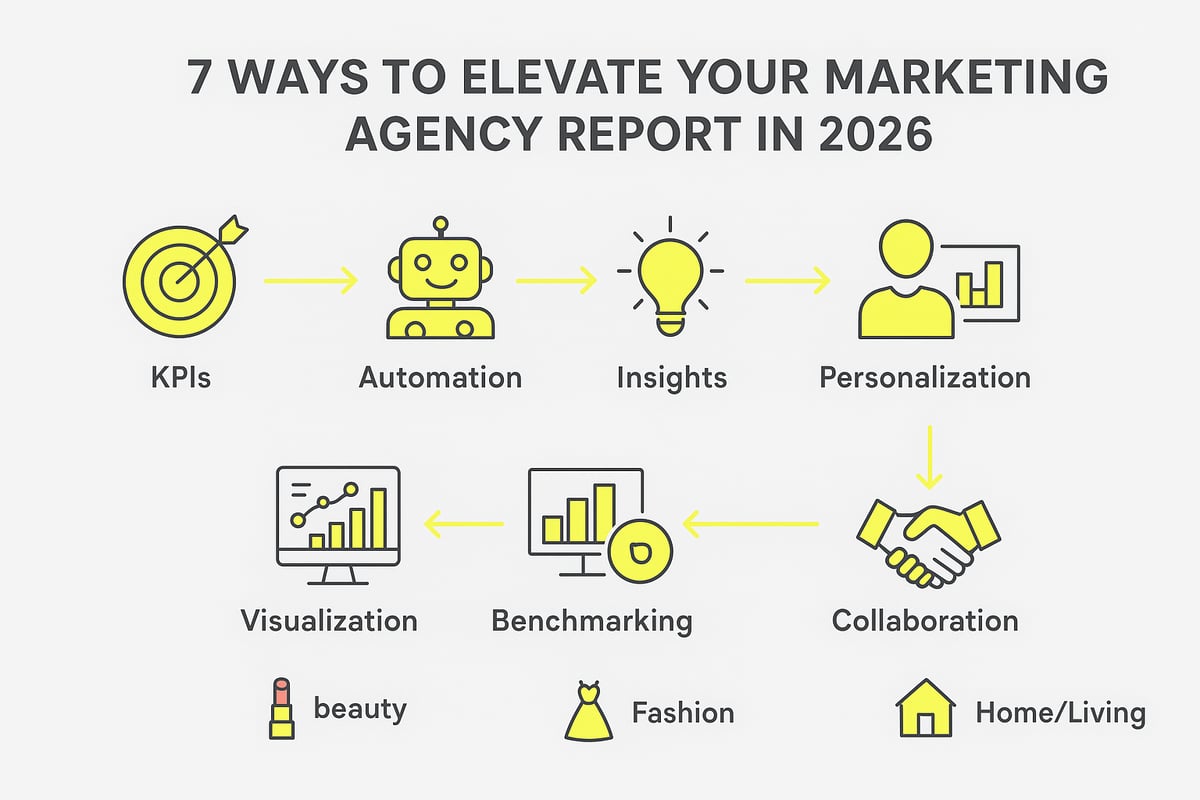
1. Define Client-Centric KPIs and Align on Success Metrics
Start every marketing agency report by anchoring it in what matters most to your client. Begin by consulting with stakeholders to identify their top business goals, whether that is sales growth, brand awareness, or retention. Map these goals to specific, measurable KPIs.
Step-by-step process:
- Host a kickoff session with the client to discuss objectives.
- List out possible KPIs by channel and business model.
- Prioritize KPIs that directly connect to client goals.
- Present the selected KPIs at the very start of each report for clarity.
For example, a beauty brand focused on influencer marketing might align on KPIs like social engagement rate and conversion rate from campaign posts. If you serve a fashion client, average order value or cart abandonment rates could be crucial. Health and wellness brands may center around subscription renewals, while home and living brands might track repeat purchase rates.
Table: Example KPIs by Industry
| Industry | Key KPIs |
|---|---|
| Fashion | AOV, ROAS, conversion rate |
| Beauty | Social engagement, influencer ROI |
| Wellness | Retention, subscription renewals |
| Home/Living | Repeat purchase rate, CPA |
Use tools like Looker Studio or Google Sheets to visualize and track these KPIs. Avoid the common pitfall of using generic or misaligned KPIs, which can erode trust and clarity.
For more examples of actionable reporting tied to real business impact, explore these data-driven marketing case studies.
2. Automate Data Collection and Reporting Processes
Manual data gathering slows down your marketing agency report delivery and increases risk of errors. Automation is now essential.
Step-by-step automation guide:
- Inventory all data sources (Google Ads, Meta, Shopify, etc.).
- Select an automation tool like Supermetrics, Hubstaff, or Google Data Studio.
- Connect your data sources and set up automated data pulls.
- Build report templates that auto-populate with fresh data.
- Schedule automatic report sends to clients (weekly, monthly, or custom cadence).
- Set up automated alerts for anomalies or major changes.
Agencies that adopted Supermetrics reported saving up to 240 days per year on manual reporting. For example, a home and living agency automated their multi-channel reports, freeing up their analysts to focus on strategic recommendations instead of repetitive tasks.
Benefits:
- Faster turnaround for every marketing agency report
- Fewer manual errors
- More time for valuable analysis and client consultation
Scale your automation as you add clients by creating modular templates and standardizing integration processes.
3. Transform Data into Actionable Insights with Strategic Commentary
Numbers alone do not drive decisions. Each marketing agency report should include expert commentary that explains not just what happened, but why it happened and what to do next.
Step-by-step to actionable insights:
- Start with an executive summary that addresses top wins and challenges.
- For each KPI, add qualitative context—why did the number move?
- Highlight opportunities and next steps based on the data.
- Use market context and client goals to frame your recommendations.
A fashion agency, for instance, might note that a spike in ROAS was due to a limited-time collaboration with a key influencer, and recommend scaling similar partnerships. Supermetrics advises pairing data with insights for maximum value.
Structure your commentary:
- Executive summary
- Key wins
- Areas for improvement
- Actionable next steps
Train your team to interpret trends, not just report them. Avoid the mistake of simply narrating results without analysis. This approach turns your marketing agency report into a strategic asset, not a data dump.
4. Personalize Reports for Each Client and Stakeholder
No two clients have the same needs. Tailor every marketing agency report to the audience, whether that is a CMO, founder, or marketing manager.
How to personalize:
- Segment report sections for different stakeholders (executive summary vs. detailed breakdown).
- Customize visuals and commentary to align with the client's brand tone and goals.
- Integrate benchmarks and context relevant to the client's industry and maturity.
- Use dashboard templates and modular frameworks to speed up personalization.
For example, a wellness brand may want a high-level overview for executives and granular channel data for the marketing team. Home decor brands might benefit from breakdowns by product category and channel.
Survey clients on their preferences and iterate your marketing agency report formats regularly. Personalization increases satisfaction and retention. Avoid one-size-fits-all templates and always incorporate client feedback.
5. Leverage Advanced Visualizations and Interactive Dashboards
Static PDFs are no longer enough. Modern marketing agency report strategies rely on interactive dashboards and compelling visuals to make data accessible and actionable.
How to implement:
- Choose tools like Looker Studio, Tableau, or Power BI.
- Design dashboards that allow clients to filter by channel, campaign, or date.
- Use clear charts, color coding, and trend lines to highlight key insights.
- Ensure dashboards are mobile-friendly and easily shareable.
- Integrate with Slack or Teams for real-time updates.
A lifestyle agency, for example, lets clients drill down into campaign performance through interactive dashboards, leading to higher engagement and more informed feedback.
Industry data: Agencies offering interactive dashboards report improved client engagement and faster decision-making.
Visual storytelling brings your marketing agency report to life, making even complex metrics easy to grasp.
6. Benchmark Performance Against Industry Standards and Competitors
Context is king. Benchmarking transforms a marketing agency report from a standalone snapshot into a strategic comparison tool.
Step-by-step benchmarking:
- Source industry benchmarks using Supermetrics, Hubstaff, or sector reports.
- Compare client performance to both internal historicals and competitor averages.
- Present benchmark data visually, making it easy to see where the client leads or lags.
- Update benchmarks regularly as markets shift.
For instance, a fashion brand can see its ROAS side by side with industry averages for brands of similar size and spend. This competitive context supports smarter budget allocation and goal setting.
Table: Benchmarking Example
| Metric | Client Result | Industry Average |
|---|---|---|
| ROAS | 5.2 | 4.8 |
| CPA | $18 | $20 |
| CTR | 2.3% | 2.1% |
Avoid outdated or irrelevant benchmarks. The right context increases the credibility and strategic value of your marketing agency report.
7. Make Reporting a Collaborative, Two-Way Conversation
The most impactful marketing agency report is not a monologue, but a dialogue. Use reporting as a foundation for ongoing collaboration and strategic planning.
How to foster collaboration:
- Embed feedback forms or Q&A sections in your reports.
- Schedule live walkthrough meetings to discuss results and next steps.
- Use live dashboards and shared docs to facilitate ongoing discussion.
- Encourage clients to ask questions and co-create future strategies.
A wellness agency, for example, holds monthly report sessions with clients to review performance and update plans together. This approach builds trust, uncovers upsell opportunities, and ensures your agency stays aligned with evolving client goals.
Avoid the pitfall of one-way reporting. Make every marketing agency report a living document that shapes your client relationships and business outcomes.
Best Practices for Implementing Next-Level Reporting in Your Agency
Staying competitive in 2026 means transforming your marketing agency report from a routine deliverable into a true driver of client success. Implementing best practices across your team, tools, and processes is essential for delivering reports that impress and retain clients. Let’s break down the concrete steps agencies are taking to ensure every marketing agency report stands out.
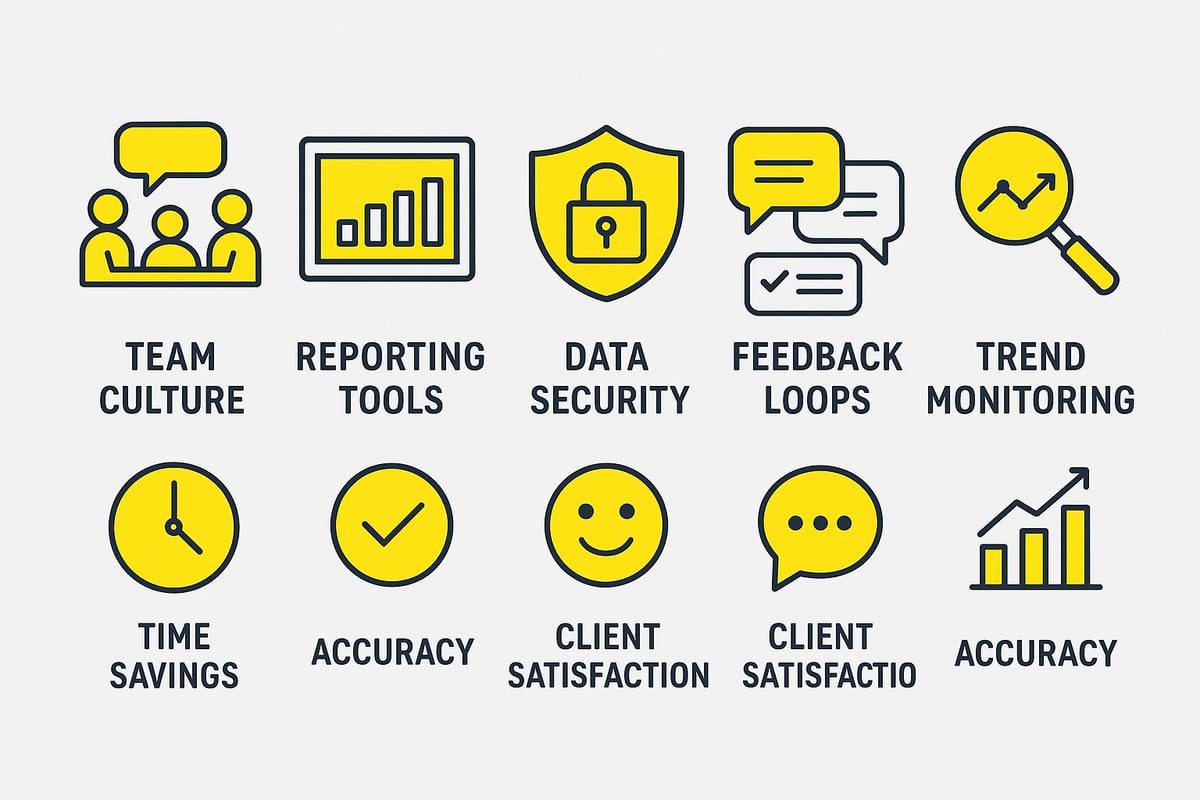
Building a Reporting Culture Across Your Team
A high-performing team is the foundation of every effective marketing agency report. Start by hosting monthly workshops to train account managers on insight-driven reporting, as seen at top home and living agencies. Implement peer review sessions and internal QA checklists to catch errors early and ensure consistency.
Create shared templates and encourage open dialogue about what makes a report actionable. For a blueprint, explore how industry leaders focus on building a reporting culture that prioritizes learning and collaboration. Agencies with strong reporting cultures see higher client retention and more confident staff.
Choosing and Integrating the Right Reporting Tools
Selecting the right platform can transform your marketing agency report workflow. Compare tools like Supermetrics, Hubstaff, Looker Studio, and Tableau based on integration options, scalability, and usability. For example, a fashion agency that switched to automated dashboards cut reporting time by 60 percent, freeing up resources for analysis.
Use this checklist when evaluating tools:
- Does it connect to all client data sources?
- Can it automate scheduled reporting?
- How easily can you customize visuals?
- Is it secure and compliant?
- Does it support mobile and real-time access?
The right tool should empower your team to focus on insights, not manual data wrangling.
Ensuring Data Accuracy, Security, and Compliance
Accuracy and trust are non-negotiable in every marketing agency report. Set up regular data audits to catch discrepancies early. Health and wellness agencies often implement double-check protocols, especially for sensitive campaign data.
Follow GDPR and other privacy standards by restricting access and encrypting sensitive data. Use automated error checking and version controls to minimize risks. When your reports are error-free and compliant, clients feel confident acting on your recommendations.
Continuous Improvement and Client Feedback Loops
Agencies leading in 2026 embed feedback directly into the marketing agency report process. Collect client input with post-report surveys or by including a feedback form in every dashboard. Lifestyle agencies, for example, run quarterly review cycles to update templates and address client suggestions.
Steps for improvement:
- Analyze client feedback for trends.
- Update report formats and KPIs as needed.
- Share changes with clients at the next review meeting.
Iterative refinement keeps your reports relevant and demonstrates responsiveness, boosting client satisfaction.
Staying Ahead of Industry Trends in Reporting
To future-proof your marketing agency report, dedicate time each quarter to researching new tools, visualization techniques, and reporting standards. Encourage your team to attend webinars, join industry forums, and participate in benchmarking studies.
For the latest strategies and innovations, agencies often consult resources like latest marketing insights and trends. For example, ecommerce agencies piloting AI-powered reporting summaries are gaining faster insights and delivering more value to clients.
Staying proactive ensures your agency’s reporting remains best-in-class, even as expectations evolve.
As you can see, elevating your marketing agency reports in 2026 is about more than just tracking data—it’s about delivering clear insights, fostering collaboration, and tailoring every detail to your clients’ unique needs. If you’re ready to move beyond generic reporting and create real value for your ecommerce clients, we’re here to help. At Good Karma Agency, we specialize in blending creative strategy with data-driven results to help fast-growing brands thrive. Let’s talk about how we can take your agency’s reporting—and your client partnerships—to the next level.
Contact us


