
The digital marketing landscape is transforming at record speed, and by 2026, brands will need a digital marketing services package that is smarter and more integrated than ever. Fast-growing ecommerce businesses face new challenges and opportunities as AI, data, and omnichannel strategies reshape how customers engage online.
This guide provides a step-by-step approach to building and selecting the right digital marketing services package for measurable results. You will discover the essential components of a 2026-ready package, planning strategies, AI and analytics integration, pricing models, and how to choose the best provider. Get ready to unlock growth and take decisive action with proven strategies designed for the future.
The Evolution of Digital Marketing Services: Trends Shaping 2026
The digital marketing services package of 2026 looks very different from what brands relied on just a few years ago. As customer expectations rise, so do the demands for smarter, more integrated solutions. Let us break down the trends shaping how brands assemble and optimize their digital marketing services package for the future.
The Shift Toward Omnichannel and Personalization
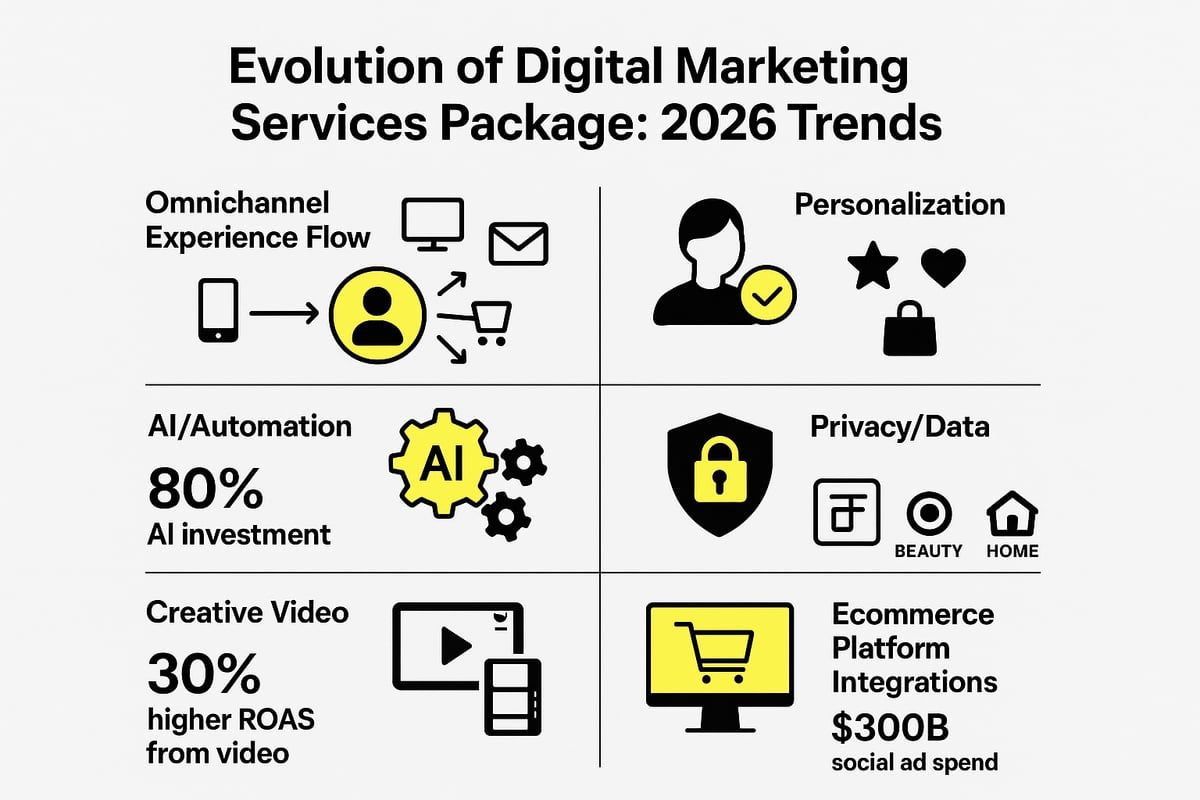
Brands can no longer afford to treat channels in isolation. A modern digital marketing services package requires seamless experiences across web, social, email, and marketplaces. AI-powered personalization is now standard, with customer data platforms enabling tailored campaigns at scale.
For example, a fashion retailer might use AI to send personalized lookbooks to shoppers via email and dynamic social ads. This approach increases relevance and boosts engagement. To implement this, start by mapping key customer touchpoints, then use integrated tools that unify data for a cohesive brand experience.
- Identify all major customer platforms (web, social, email, marketplaces)
- Choose a customer data platform (CDP) to centralize data
- Use AI tools for real-time segmentation and personalized content
A digital marketing services package that prioritizes omnichannel personalization is essential for 2026 success.
AI, Automation, and Predictive Analytics
AI is transforming every aspect of the digital marketing services package. From content creation to campaign optimization, automation streamlines workflows and reduces manual tasks. Predictive analytics lets brands forecast customer behavior, segment audiences, and maximize lifetime value.
According to Gartner, 80% of marketers plan to increase their AI investment by 2026. Beauty brands, for instance, use AI chatbots for instant support and predictive tools to anticipate when a customer is ready to reorder.
Here's how to make AI actionable in your digital marketing services package:
- Implement AI-driven content generation for blogs and ads
- Use chatbots for 24/7 customer service
- Analyze predictive models to refine targeting and budget allocation
By embedding AI and analytics, your digital marketing services package becomes more efficient and profitable.
Privacy, First-Party Data, and Compliance
The end of third-party cookies is forcing brands to rethink their digital marketing services package. Direct relationships with customers and compliant data collection are now critical. Regulations like GDPR and CCPA set strict standards for privacy.
A real-world example: Leading beauty brands offer loyalty programs that encourage customers to share data directly. This first-party data enables personalized offers and improves retention while staying compliant.
To future-proof your digital marketing services package:
- Audit current data collection practices for compliance
- Launch loyalty or membership programs to gather first-party data
- Regularly review privacy policies to align with global regulations
Prioritizing privacy and first-party data ensures your digital marketing services package is both effective and trustworthy.
Performance-Driven Creative
A successful digital marketing services package in 2026 blends storytelling with measurable outcomes. Short-form video, interactive content, and shoppable posts are now core drivers of engagement and conversions.
Meta's internal data reports that video ads deliver 30% higher ROAS for ecommerce brands. Lifestyle companies, for example, use TikTok and Instagram Reels to showcase products in authentic, creative ways.
To elevate your digital marketing services package:
- Develop video-first content calendars
- Test interactive ad formats and measure performance
- Combine brand storytelling with clear calls-to-action
Performance-driven creative ensures your digital marketing services package delivers both brand value and bottom-line results.
Integration of Ecommerce Platforms and Martech Stacks
Seamless integration is now a non-negotiable part of any digital marketing services package. Platforms like Shopify and Klaviyo, when connected with CRM and analytics tools, enable unified data and automation.
Home and living brands, for instance, use Shopify to sync inventory, Klaviyo for segmented email campaigns, and analytics dashboards for real-time reporting. This integration streamlines workflows and drives consistent growth.
Steps to integrate your digital marketing services package:
- Connect ecommerce, CRM, and marketing automation platforms
- Ensure data flows bi-directionally for real-time insights
- Set up dashboards for unified performance tracking
For a detailed overview of how to assemble a fully integrated digital marketing agency services package, explore proven solutions tailored for fast-growing ecommerce brands.
Core Components of a Winning Digital Marketing Services Package
To succeed in 2026, brands need a digital marketing services package that goes beyond the basics. The right package combines advanced technology, creativity, and data-driven tactics tailored to your market. Below, we break down each core component, providing actionable steps and real-world examples from fast-growing brands.

Search Engine Optimization (SEO) and AI-Enhanced Visibility
Modern SEO is the engine of organic growth. In a digital marketing services package, prioritize on-page optimization, technical SEO, and content tailored for 2026 search algorithms. Leading home and living brands now use AI to generate product descriptions and blog content that ranks for high-intent queries.
To stay ahead:
- Conduct regular technical audits using tools like Ahrefs or SEMrush.
- Optimize for voice search and long-tail queries.
- Use AI tools for content ideation and topic clustering.
Generative AI and large language models (LLMs) will continue to shape search, making it essential to adapt your digital marketing services package for evolving algorithms.
Paid Media: PPC, Social, and Programmatic Advertising
Paid media is critical for scaling reach and driving conversions rapidly. A robust digital marketing services package should include Google Ads, Meta, TikTok, Pinterest, and programmatic platforms. By 2026, global social ad spend is projected to hit $300 billion, with brands in fashion and beauty seeing strong returns from dynamic creative testing.
Action steps:
- Set up automated rules and AI-driven bidding strategies.
- Test multiple ad creatives weekly for each channel.
- Use platform analytics to identify top-performing segments.
Dynamic personalization in social and programmatic ads ensures your message reaches the right audience, fueling measurable growth.
Content Marketing & Brand Storytelling
Content is the heartbeat of any digital marketing services package. Editorial calendars, blogs, video, and user-generated content (UGC) all play a role. Lifestyle brands, for instance, leverage influencer collaborations and shoppable video content to boost engagement.
Steps to implement:
- Develop a quarterly content calendar focused on customer interests.
- Mix formats: blog posts, interactive infographics, and short-form videos.
- Encourage UGC by running branded hashtag campaigns.
Data shows that video ads can drive 30 percent higher ROAS for ecommerce brands, making multimedia content essential for 2026.
Conversion Rate Optimization (CRO) and UX/UI Design
Optimizing your site’s user experience is fundamental. A digital marketing services package should include A/B testing, heatmaps, and continuous funnel analysis. For example, fashion and beauty brands have reported over 50 percent conversion uplift using structured CRO sprints.
Actionable steps:
- Run weekly A/B tests on landing pages and product pages.
- Analyze heatmaps to identify friction points.
- Prioritize mobile-first and accessibility best practices.
For deeper insights into CRO tactics, explore CRO and conversion optimization strategies that drive real results.
Email, SMS, and Retention Marketing
Retention is the secret weapon of a successful digital marketing services package. Automated flows, segmentation, and personalized campaigns keep your audience engaged. Brands integrating Klaviyo with Shopify see increased repeat purchases and customer lifetime value.
To excel:
- Set up automated welcome, cart abandonment, and win-back flows.
- Segment lists by purchase history and engagement.
- Personalize messages with AI-driven recommendations.
On average, email marketing delivers $42 ROI for every $1 spent, making it a must-have in your strategy.
Analytics, Attribution, and Reporting
Data is the foundation of growth. Your digital marketing services package should provide closed-loop ROI tracking, multi-touch attribution, and clear dashboards. Brands using platforms like RevenueCloudFX can unify reporting and optimize campaigns in real time.
Key steps:
- Implement multi-touch attribution models for accurate ROI.
- Set up real-time dashboards tracking campaign performance.
- Schedule regular reviews for continuous improvement.
Unified analytics accelerate optimization, helping brands achieve faster growth and higher returns.
Step-by-Step Guide to Building Your 2026 Digital Marketing Services Package
Building a future-proof digital marketing services package requires clear planning, strategic choices, and seamless integration. Follow these seven actionable steps to assemble a package that drives measurable growth in 2026.

Step 1: Define Business Goals and KPIs
Start by clarifying your business objectives and key performance indicators. Align every aspect of your digital marketing services package with targets like revenue growth, customer acquisition, or retention.
Use the SMART framework. For example, a wellness brand might set a goal to "increase direct-to-consumer sales by 30% within 12 months." Break these goals down by channel and campaign.
Set both leading and lagging KPIs, such as click-through rates, conversion rates, and customer lifetime value. This foundation ensures your digital marketing services package is tailored for measurable success.
Step 2: Map Your Customer Journey
Identify each touchpoint your customers experience, from first discovery to repeat purchase. Use journey mapping tools to visualize and analyze these stages.
Highlight friction points. For instance, a fashion retailer may notice cart abandonment spikes on mobile devices. Addressing these can significantly improve performance.
Document interactions across channels like social, email, and marketplaces. Understanding your buyer's path lets you customize your digital marketing services package for optimal engagement and retention.
Step 3: Audit Current Marketing Channels and Performance
Evaluate your existing channels: SEO, paid ads, email, and social. Gather data on reach, engagement, and ROI. Use analytics platforms for a comprehensive view.
For example, a lifestyle brand might discover its Pinterest campaigns underperform compared to Instagram. This insight helps you reallocate resources for maximum impact.
Benchmark against industry standards and competitors. An honest audit ensures your digital marketing services package builds on strengths and addresses gaps.
Step 4: Select Core Services Based on Growth Levers
Choose the services that will drive the greatest results for your business. Prioritize based on opportunity, budget, and impact.
For ecommerce brands, a robust digital marketing services package often includes SEO for organic growth, PPC for rapid scaling, and CRO for higher conversions. Evaluate each service's potential ROI.
List your top three growth levers and align services accordingly. This targeted approach ensures your digital marketing services package delivers measurable value.
Step 5: Integrate Technology and Data Infrastructure
Connect all your platforms for unified data flow. Integrate Shopify, Klaviyo, CRM, and analytics tools to enable seamless automation and reporting.
Ensure compliance with privacy regulations like GDPR and CCPA. Many brands now leverage AI-powered tools to personalize campaigns and streamline operations. For practical tips, explore How to use AI in ecommerce.
A well-integrated digital marketing services package lets you respond to customer behaviors in real time and scale efficiently.
Step 6: Develop Creative and Content Strategy
Balance compelling storytelling with conversion-focused content. Build an editorial calendar that includes blogs, video, user-generated content, and shoppable experiences.
For example, a beauty brand might collaborate with influencers on TikTok, then repurpose content for Instagram and email. Use A/B testing to optimize creative assets.
Your digital marketing services package should include guidelines for consistent branding and performance-driven messaging across all platforms.
Step 7: Establish Measurement, Reporting, and Optimization Protocols
Set up dashboards to track performance across all channels. Use tools like Google Analytics 4 or in-house platforms to monitor ROI, attribution, and campaign effectiveness.
Schedule regular reviews—weekly CRO sprints, for instance—to test landing pages and refine strategies. Document learnings and adjust tactics as needed.
A data-driven digital marketing services package ensures continuous improvement and helps you stay ahead in the competitive 2026 landscape.
Pricing Models and ROI: What to Expect from Digital Marketing Packages in 2026
Selecting the right digital marketing services package in 2026 means understanding not just the tactics on offer, but also how pricing works and how results are measured. Fast-growing ecommerce brands need clarity and transparency to ensure every dollar spent translates into measurable impact.
Common Pricing Structures
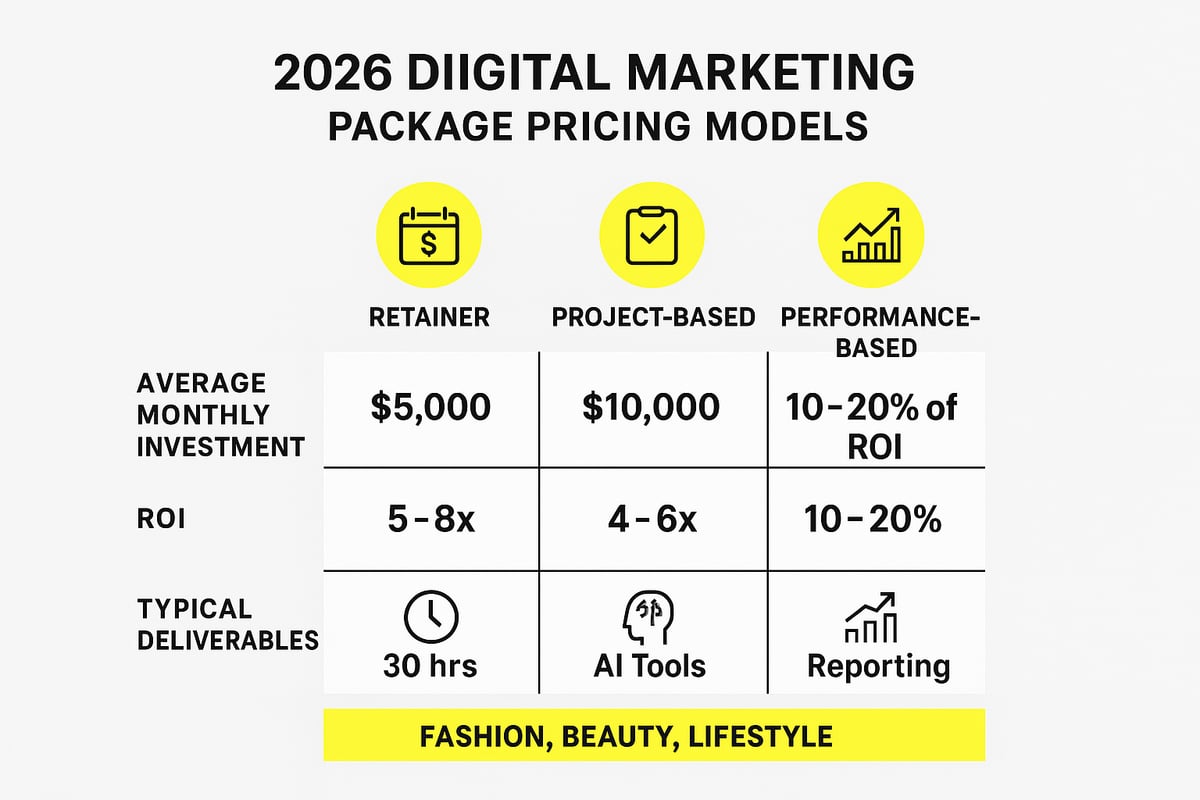
When evaluating a digital marketing services package, you’ll encounter three main pricing models. The retainer model charges a monthly fee for ongoing strategy and execution, ideal for brands seeking consistency. Project-based pricing covers one-off initiatives, such as a website launch or a seasonal campaign. Performance-based models tie agency compensation to KPIs like revenue or ROAS.
For ecommerce brands, full-service packages typically start at $3,000 per month, with costs scaling based on channel complexity and ad spend. According to Digital Marketing Statistics 2026, global social ad spend alone is projected to hit $300B, reflecting the growing investment in digital channels.
What’s Included: Deliverables and Transparency
A robust digital marketing services package should spell out exactly what’s included. Look for detailed breakdowns of hours allocated, deliverables by channel, and access to proprietary technologies or AI-powered recommendations. Monthly reporting, campaign analysis, and regular strategy sessions are now standard for high-performing agencies.
For example, a lifestyle brand might receive weekly creative testing, monthly influencer campaign reports, and access to automated analytics dashboards. Transparency is key—ensure you receive a clear scope of work and regular updates to avoid surprises.
Calculating and Forecasting ROI
To maximize your digital marketing services package, use data-driven attribution models. These include first-touch, last-touch, and increasingly, multi-touch models for a holistic view of customer journeys. Platforms like Google Analytics 4 and RevenueCloudFX make it easier to forecast revenue impact and optimize spend.
Brands with unified reporting see optimization cycles improve by 25 percent, allowing faster pivots and better results. For those considering performance marketing strategies, ensure ROI calculations align with your business goals and that each channel’s contribution is measured accurately.
Red Flags and Cost Traps to Avoid
Beware of packages that hide fees, lack clear deliverables, or promise guaranteed results without transparent methodology. Insist on service level agreements, regular performance reviews, and open communication with your agency partner.
Always review what’s included in your digital marketing services package—unclear scopes often lead to missed expectations or additional costs. Regularly audit performance and demand actionable insights to keep your investment working for your growth.
How to Evaluate and Select the Right Digital Marketing Partner for 2026
Selecting the right partner for your digital marketing services package can make or break your 2026 growth ambitions. With the landscape evolving fast, knowing what to look for in an agency is crucial for ecommerce brands aiming to scale efficiently. Let’s break down the actionable steps and practical criteria that will help you identify a data-savvy, creative, and results-driven partner.
Agency Specialization and Industry Fit
Start by narrowing your search to agencies with proven expertise in your niche. For a digital marketing services package to deliver real impact, your partner must understand the nuances of ecommerce and your sector, whether that’s fashion, beauty, health, or home living.
Look for case studies and client lists that match your vertical. For example, fashion brands often work with agencies experienced in TikTok and Instagram campaigns, while beauty brands benefit from partners skilled in influencer collaborations and loyalty program integrations. This alignment ensures strategies are tailored to your audience and marketplace dynamics.
Data-Driven and Creative Balance
A modern digital marketing services package must blend analytical rigor with bold creativity. Evaluate how agencies use data and AI to inform campaigns, optimize spend, and drive measurable results. The most effective partners pair performance marketing with storytelling to engage, convert, and retain customers.
Ask about their approach to campaign testing, predictive analytics, and content creation. As highlighted in AI's Impact on Digital Marketing, agencies using AI-powered tools can deliver hyper-personalized experiences and faster optimization cycles. For example, a lifestyle brand might see a 30 percent increase in ROAS by leveraging AI-driven creative testing.
Technology, Tools, and Reporting Capabilities
Your digital marketing services package should include access to advanced martech and unified analytics. Assess whether agencies offer integrations with Shopify, Klaviyo, and CRM platforms, as well as real-time dashboards for transparent reporting.
Ask for a demo of their reporting tools. Leading partners provide closed-loop attribution, revenue impact analysis, and automated insights. For example, ecommerce brands using unified reporting platforms typically achieve 25 percent faster optimization cycles, ensuring your marketing investments are always aligned with business goals.
Team Structure, Communication, and Support
Evaluate the agency’s team composition and communication protocols. A high-performing digital marketing services package requires dedicated strategists, channel specialists, and proactive project managers.
Request an overview of team roles, onboarding processes, and escalation paths. Agencies with a 91 percent retention rate and 93 percent client satisfaction, such as those serving fashion and home brands, consistently deliver better results. Clear communication and regular check-ins help maintain alignment and momentum.
Client Results, Reviews, and Case Studies
Prioritize agencies with a track record of driving measurable outcomes. Scrutinize testimonials, case studies, and industry reviews for evidence of increased conversion rates, higher ROAS, and sustained revenue growth.
For instance, a beauty brand may highlight a 50 percent conversion rate uplift after implementing a new digital marketing services package. Use third-party sites and industry reports to validate claims and benchmark performance. Choose partners willing to share transparent results and detailed reporting.
As you look ahead to 2026, you know that building a digital marketing package isn’t just about checking boxes—it’s about finding the right balance between creativity and performance, and truly connecting with your customers across every touchpoint. If you’re ready to take the next step, let’s talk about how Good Karma Agency can help you translate these strategies into real, measurable results for your ecommerce brand. Whether you want to refine your Shopify store, optimize conversions, or unify your data and creative efforts, we’re here to be your dedicated growth partner.
Contact us


