

In 2026, the race for digital growth is fierce, with brands facing more competition and complexity than ever before. Choosing the right digital marketing partners is now a pivotal decision that directly influences your brand’s reach, reputation, and revenue.
This guide reveals a proven process for selecting digital marketing partners who will help your business thrive. You will learn how to navigate evolving platforms, set clear objectives, evaluate agency expertise, and avoid costly mistakes. Ready to maximize your ROI and drive brand impact? Let’s get started.
Understanding the 2026 Digital Marketing Landscape
Navigating the 2026 digital landscape is pivotal for brands seeking effective digital marketing partners. A deep understanding of evolving channels, shifting consumer expectations, AI advances, and sector-specific trends ensures you select the right agency for your growth ambitions.
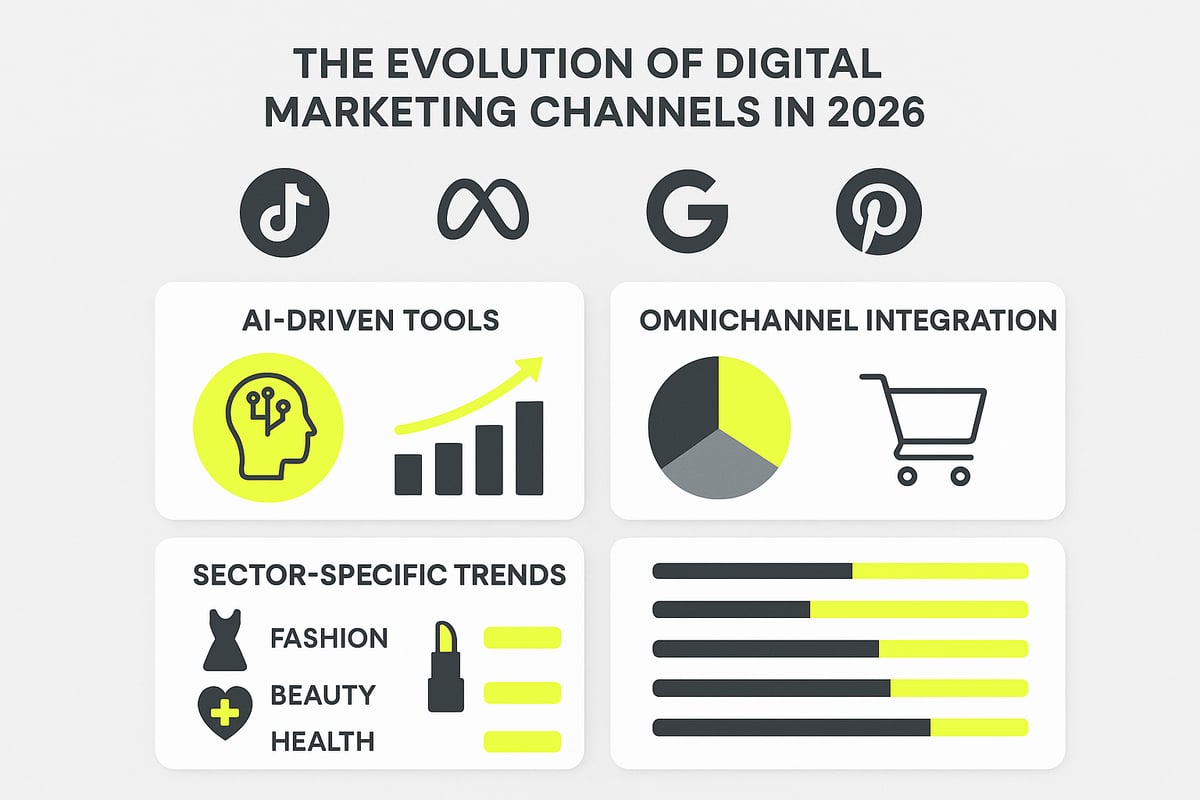
The Evolution of Digital Marketing Channels
The range of digital platforms has exploded. Brands now engage audiences through TikTok, Meta, Google, Pinterest, and up-and-coming channels. In 2026, digital marketing partners must master not just one, but several platforms to drive results.
AI-driven tools and marketing automation are no longer optional. Fashion brands, for example, use TikTok Shop and Instagram Checkout to close the loop between content and commerce. By 2025, 70% of e-commerce brands had expanded to three or more channels (Statista). Cross-channel attribution is now essential. When evaluating digital marketing partners, ask for case studies that show proven omnichannel results.
Consumer Behavior and Expectations in 2026
Consumers expect hyper-personalization at every touchpoint. Digital marketing partners must help brands deliver tailored experiences while respecting privacy regulations. First-party data strategies are now critical.
The influencer and creator economy has matured. Beauty brands increasingly leverage micro-influencers for highly targeted campaigns. According to McKinsey, 82% of Gen Z prefer brands offering personalized digital engagement. When choosing digital marketing partners, assess their experience with influencer marketing and compliance with evolving privacy laws.
The Role of Data, AI, and Automation
Leading digital marketing partners use AI for predictive analytics, automated content, and ad optimization. Automation powers email, SMS, and retargeting, streamlining campaigns for higher efficiency.
For example, home and living brands automate product recommendations to boost conversions. By 2026, 60% of digital marketing spend will go to AI-powered tools (Gartner). To learn more about how AI can drive your strategy, read this guide on how to use AI in ecommerce. Always request a demo of your partner’s tech stack and reporting dashboards.
The Importance of Brand and Performance Balance
A successful digital marketing partner blends creative branding with data-driven performance. This dual focus is vital in 2026, as brands need to stand out while delivering measurable results.
Lifestyle brands, for instance, combine storytelling with conversion optimization to engage and convert. Beware of agencies that focus solely on branding or performance, as this can limit your growth. Look for digital marketing partners with a portfolio that proves their ability to balance both.
Industry-Specific Trends (Fashion, Beauty, Health, Home)
Every sector faces unique marketing challenges. Fashion brands lead with immersive TikTok campaigns, beauty brands excel with micro-influencers, health brands build trust through expert content, and home brands use AI-driven personalization.
The most innovative digital marketing partners show proven results in your sector, adapting strategies to ever-evolving trends.
Defining Your Digital Marketing Needs and Goals
Knowing exactly what you want from digital marketing partners is the foundation for a successful collaboration in 2026. Before you start your search, clarify your business model, set measurable goals, pinpoint which services you need, and allocate your budget for maximum impact.

Assessing Your Business Model and Growth Stage
Start by evaluating your business model and growth phase. Are you an e-commerce brand, a service provider, or a brick-and-mortar retailer? Each model has unique needs when it comes to digital marketing partners.
For example, a health and wellness brand moving from direct-to-consumer to an omnichannel approach must prioritize partners with omnichannel expertise. Startups might need agile, full-service teams, while established brands may prefer specialists for scaling campaigns.
To clarify your needs, map out your customer journey and identify where digital marketing partners can add the most value. This step ensures you select partners with relevant experience for your sector and growth stage.
Setting Clear Objectives and KPIs
Define your measurable objectives before engaging digital marketing partners. Are you focused on revenue growth, a specific return on ad spend (ROAS), or reducing customer acquisition costs (CAC)? For example, many beauty brands in 2026 aim for a 7x ROAS on Meta ads.
Establish clear KPIs such as lifetime value (LTV), conversion rates, or brand awareness targets. Use benchmarks from your industry to set realistic goals. For strategic guidance on aligning objectives with partner selection, consult Digital marketing strategy insights.
Document your priorities so digital marketing partners can tailor strategies to your business. This clarity accelerates onboarding and ensures accountability.
Identifying Required Services and Specializations
List the digital marketing services your business needs most. Do you require performance marketing, creative content, conversion rate optimization (CRO), email automation, or web development? Fast-growing fashion brands, for instance, often need both Shopify development and TikTok ad expertise.
Consider whether you need a multidisciplinary agency or niche specialists. For lifestyle brands, a partner skilled in both creative branding and data-driven campaigns is vital. Clarifying these needs helps you filter digital marketing partners who can deliver on every front.
Budget Planning and Resource Allocation
Budgeting is crucial when choosing digital marketing partners. In 2026, e-commerce brands typically invest 10-15% of their revenue into digital marketing. Understand common agency pricing models—retainer, project-based, or performance-based—and weigh them against your growth ambitions.
Factor in your in-house capabilities. If your team handles organic social but lacks expertise in paid ads, allocate budget accordingly. Use a table to compare agency costs and expected ROI, ensuring transparency before signing contracts.
Smart allocation sets the stage for a partnership that fuels sustainable growth.
Step-by-Step Process to Evaluate Digital Marketing Partners
Choosing the right digital marketing partners in 2026 requires a structured approach. Each step helps you filter, assess, and select agencies with the expertise and alignment to drive your business forward. Follow this process to ensure your partnership delivers measurable growth and long-term success.
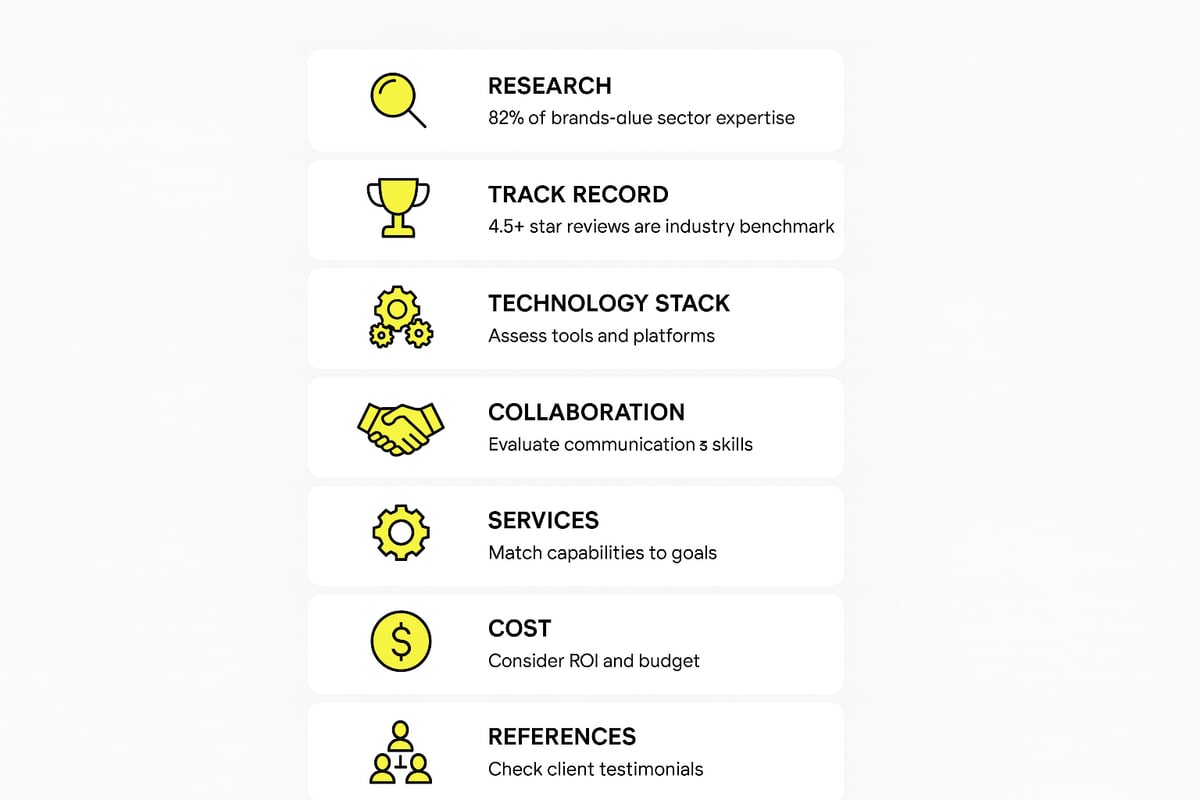
Researching and Shortlisting Potential Partners
Start by identifying digital marketing partners through directories, industry awards, and referrals from trusted contacts. Platforms like DesignRush, Clutch, and LinkedIn are valuable for discovering agencies with proven results.
Review agency portfolios to see if they have experience in your sector. For example, lifestyle and home brands often highlight case studies showing successful cross-channel campaigns.
Create a shortlist by focusing on agencies with strong client lists, transparent service offerings, and a track record of innovation. This step ensures you only engage digital marketing partners who understand your niche and growth ambitions.
Assessing Industry Experience and Track Record
Prioritize digital marketing partners with deep expertise in your industry. Agencies familiar with fashion, beauty, health, or home sectors will understand your audience and challenges.
Look for evidence of sector-specific results. For instance, a fashion agency that increased a client’s conversion rates by 50% demonstrates real impact. Certifications from Shopify, Meta, or Google support credibility.
Ask about relevant campaigns, growth metrics, and how they’ve adapted to market changes. This diligence ensures your digital marketing partners can deliver meaningful outcomes.
Evaluating Service Offering and Strategic Fit
Assess whether potential digital marketing partners offer full-service solutions or specialize in key areas such as performance marketing, creative, or web development.
Alignment with your business model and brand values is crucial. For example, a lifestyle brand needing both creative storytelling and conversion optimization should seek an agency with multidisciplinary teams.
Check for flexibility in their approach and willingness to tailor strategies to your specific needs. Digital marketing partners that adapt to your goals will support long-term growth and innovation.
Analyzing Data-Driven Approach and Technology Stack
Evaluate how digital marketing partners leverage analytics, AI, and automation to drive performance. Top agencies use predictive analytics, real-time dashboards, and advanced attribution modeling.
Transparency in reporting is essential. Ask for sample dashboards and reports that track key metrics like ROAS, CAC, and customer LTV.
For example, leading agencies provide clients with real-time access to campaign data, enabling agile decision-making. Make sure your digital marketing partners are committed to data integrity and actionable insights.
Reviewing Creative Capabilities and Brand Understanding
Examine the creative work of digital marketing partners by reviewing design portfolios, content samples, and campaign case studies.
Look for a balance between creativity and performance. For example, a home and living brand might need an agency that can rebrand for digital-first audiences while still optimizing for conversion.
Assess how well they understand your brand’s tone, visual identity, and messaging. Digital marketing partners who excel creatively will elevate your brand and drive measurable engagement.
Communication, Collaboration, and Cultural Fit
Effective communication is a hallmark of successful digital marketing partners. Evaluate responsiveness during initial conversations and clarity in their proposals.
Discuss collaboration processes, such as weekly stand-ups or shared Slack channels. Agencies that integrate seamlessly with your team foster a productive partnership.
Proactive strategic guidance is vital. Digital marketing partners that bring new ideas and adapt quickly to changes will help you stay ahead in a competitive market.
Checking References, Reviews, and Case Studies
Request references and review independent ratings on platforms like Google and Clutch. Seek digital marketing partners with a 4.5+ star average and detailed, sector-specific testimonials.
Analyze case studies that showcase measurable outcomes in your industry. For examples of successful partnerships and tangible results, explore Proven digital marketing case studies.
This step validates that your shortlisted digital marketing partners have delivered real value to brands similar to yours.
Structuring the Pilot Project or Initial Engagement
Before committing to a long-term agreement, structure a pilot project or test campaign with your chosen digital marketing partners.
Define clear deliverables, timelines, and success metrics. For example, a beauty brand might start with a Meta Ads campaign to evaluate the agency’s creative and performance capabilities.
A well-defined pilot allows you to assess collaboration, results, and fit without major risk. This ensures your digital marketing partners are the right match for your long-term goals.
Key Qualities to Look for in 2026 Digital Marketing Partners
Selecting the right digital marketing partners in 2026 requires a sharp eye for measurable results, creativity, technical prowess, adaptability, and transparent collaboration. As the digital landscape evolves, brands in fashion, beauty, health, and home sectors must scrutinize potential partners for these essential qualities to drive real business growth.

Proven Results and Measurable Impact
Top digital marketing partners consistently deliver on what matters most: tangible business impact. Look for evidence of revenue growth, improved conversion rates, and strong ROI in their case studies. For example, a wellness brand reported a 326% increase in email revenue after switching to a results-driven agency.
To verify results, request before-and-after metrics, client testimonials, and references. Review case studies in your sector, such as a fashion retailer boosting online sales through targeted TikTok campaigns. For a deeper understanding of performance-driven strategies, explore this Performance marketing services overview.
Checklist:
- Ask for ROI figures and growth statistics
- Review sector-specific case studies
- Validate claims with client references
Creative and Strategic Excellence
The best digital marketing partners blend creative vision with strategic execution. Creative excellence is not just about eye-catching visuals, but also about campaigns that resonate with target audiences and drive measurable outcomes. Consider a fashion brand that achieved viral success on TikTok, increasing brand awareness and sales within weeks.
Evaluate partners by reviewing their creative portfolio and campaign outcomes. Award-winning designs and innovative storytelling are indicators of high standards. Ensure the agency can adapt your brand voice across platforms, from Instagram to email.
Action Points:
- Request creative samples relevant to your sector
- Analyze the impact of past campaigns
- Check for adaptability across multiple channels
Data-Driven and Tech-Savvy Approach
Digital marketing partners in 2026 must excel at leveraging data and technology. Look for agencies that use advanced analytics, AI-powered tools, and robust attribution models for campaign optimization. For instance, e-commerce brands benefit from real-time A/B testing on landing pages to maximize conversions.
Ask about their technology stack and how they use data for decision-making. Transparency in reporting is critical; demand access to dashboards and frequent performance updates. As AI continues to reshape digital marketing, staying current with these advancements is non-negotiable.
Key Questions:
- What AI and analytics tools do you use?
- How do you report and optimize campaigns?
- Can you share examples of data-driven success?
Flexibility, Scalability, and Proactivity
Your digital marketing partners should be able to scale with your brand and adapt to changing market conditions. Flexible agencies quickly respond to trends, new channels, or shifts in consumer behavior. For example, a home and living brand expanded from local to global markets with agile agency support, launching region-specific campaigns in weeks.
Look for proactive recommendations and evidence of supporting rapid growth or pivots. Discuss scalability in contracts and review how the agency has handled similar transitions for other brands.
Steps to Evaluate:
- Ask for examples of rapid scaling or pivots
- Discuss scalability in the contract
- Assess their process for monitoring trends and suggesting innovations
Transparent Communication and Collaboration
Effective digital marketing partners prioritize open, regular communication and seamless collaboration. Clear reporting, frequent updates, and integrated workflows are essential for long-term success. For instance, monthly performance reviews with actionable insights help brands quickly adjust strategies.
Ensure the agency uses collaborative tools, sets defined points of contact, and maintains a culture of transparency. Weekly status calls or shared project dashboards can keep both teams aligned and accountable.
Best Practices:
- Set clear communication protocols
- Use shared project management tools
- Schedule regular performance reviews
Common Red Flags and Mistakes to Avoid
In the fast-changing world of digital marketing partners, making the wrong choice can stall your growth and drain resources. Recognizing red flags early helps you avoid costly missteps and ensures your brand thrives.
Overpromising and Under-Delivering
Beware of digital marketing partners who make grand promises, like guaranteeing a #1 Google ranking in 30 days or tripling your sales overnight. These claims often signal a lack of transparency and realistic strategy. For example, a beauty brand in 2025 signed with an agency touting instant results but saw no measurable ROI after three months.
To protect your brand, always ask for case studies with clear data and request a step-by-step roadmap. Compare agency claims to industry benchmarks and stay updated on what's realistically achievable by reviewing Digital Marketing Trends for 2026. If an offer sounds too good to be true, it usually is.
Lack of Industry or Channel Expertise
Choosing digital marketing partners without proven experience in your sector can backfire. For instance, a home and living brand hired a generalist agency to migrate their e-commerce platform, resulting in a 25% drop in conversion rates due to missed nuances in product merchandising.
Always verify sector expertise by requesting relevant case studies, certifications, and references from similar brands. Look for digital marketing partners who understand your industry's unique challenges and regulations. This ensures campaigns are tailored and effective.
Poor Communication and Slow Response Times
Consistent, clear communication is vital for successful digital marketing partners. Missed deadlines or delayed feedback can lead to wasted ad spend and missed seasonal opportunities. A health and wellness brand reported that slow agency response times caused them to miss a crucial product launch window, impacting quarterly results.
Set expectations for response times and project updates during onboarding. Use shared tools like Slack or Asana for real-time tracking, and schedule weekly check-ins. Digital marketing partners who prioritize transparency and collaboration will help your brand adapt quickly.
One-Size-Fits-All Strategies
Digital marketing partners offering cookie-cutter solutions rarely deliver long-term results. A fashion retailer saw stagnant growth after their agency ran generic ad campaigns that failed to resonate with their niche audience. Tailored approaches, by contrast, drive higher engagement and ROI.
Insist on customized proposals and ask how the agency will adapt strategies to your goals. Request examples of how they have adjusted campaigns for different brands. Make sure your digital marketing partners can demonstrate flexibility and innovation in their approach.
Hidden Fees and Unclear Contracts
Unanticipated costs can erode trust and strain budgets. Some digital marketing partners add fees for basic services like reporting or meetings, which should be standard. For example, a lifestyle brand discovered extra charges for monthly performance reports, leading to friction and eventual contract termination.
Before signing, review contracts line by line and clarify all deliverables and pricing. Ask for a transparent fee structure and avoid agencies that hesitate to provide clear terms. Trustworthy digital marketing partners are upfront about all costs and expectations.
Trends Shaping Digital Marketing Partnerships in 2026
The landscape for digital marketing partners in 2026 is defined by rapid technological innovation and shifting client expectations. Brands looking to grow must adapt quickly, as agencies leverage new tools and models to deliver measurable impact. Understanding these trends will help you choose the right digital marketing partners for your business goals.
Rise of AI-Driven and Automation-First Agencies
AI is transforming how digital marketing partners operate, enabling smarter media buying, creative generation, and analytics. In 2026, over 60% of digital marketing spend is allocated to AI-powered tools. Agencies that prioritize automation streamline campaign management, freeing up time for strategy and innovation.
For example, fashion brands are using AI-driven agencies to automate product recommendations and optimize ad spend in real time. To evaluate such agencies, ask about their AI stack, automation workflows, and transparency in reporting. A step-by-step approach could include:
- Requesting a demo of their AI-powered analytics dashboard
- Reviewing case studies with measurable results
- Confirming ongoing AI training for their team
For a deeper look at AI’s role in agency evolution, see AI's Impact on Digital Marketing in 2026.
Shift Toward Performance-Based Partnerships
Performance-based models are gaining traction, tying agency compensation to outcomes like ROAS or CPA. This trend aligns incentives, as both clients and digital marketing partners focus on achieving clear, measurable goals. In the beauty sector, brands negotiate performance-based retainers that reward agencies for hitting ambitious targets.
To implement this, outline key performance metrics at the outset. Steps include:
- Defining primary KPIs (e.g., 7x ROAS for Meta campaigns)
- Creating transparent reporting frameworks
- Setting review intervals to adjust tactics based on results
This approach fosters trust and drives continuous improvement, making it easier to scale successful campaigns.
Growing Importance of Multichannel and Omnichannel Expertise
Consumers expect seamless brand experiences across platforms. Digital marketing partners must coordinate campaigns on Meta, TikTok, Google, Pinterest, and email to maximize reach and engagement. By 2025, 70% of e-commerce brands expanded to three or more channels.
Real-world example: A lifestyle brand synchronizes product launches across digital touchpoints, leveraging agentic AI to automate messaging and inventory updates. To evaluate agency capabilities:
- Review their multichannel case studies
- Assess their integration with unified commerce systems
- Ask about their experience with channel-specific creative
Learn more about the impact of unified commerce and automation in Unified Commerce and Agentic AI in E-commerce.
Emphasis on Brand-Performance Hybrid Agencies
The most effective digital marketing partners in 2026 blend creative storytelling with data-driven performance. Agencies that integrate branding and performance strategies deliver both high engagement and sales growth. For instance, a home and living brand achieved a 40% lift in engagement by combining influencer content with conversion-focused campaigns.
To identify a strong hybrid agency:
- Evaluate their portfolio for both creative excellence and measurable ROI
- Check for sector expertise in your vertical
- Request a pilot project that tests both branding and performance tactics
A hybrid approach ensures your brand stands out while driving revenue, setting the foundation for long-term success with digital marketing partners.
Actionable Tips for a Successful Digital Marketing Partnership
Building a strong foundation with your digital marketing partners is essential for long-term growth. The following actionable steps will help you maximize value, drive results, and ensure a seamless collaboration.
Establishing Clear Expectations and Communication
Set the stage early by defining clear roles, responsibilities, and communication channels with your digital marketing partners. For instance, beauty brands often run weekly status calls and use project management tools to keep everyone aligned.
Action steps:
- Assign a dedicated point of contact on both sides.
- Schedule regular check-ins, such as bi-weekly video calls or Slack updates.
- Outline response time expectations to avoid bottlenecks.
Clear communication reduces misunderstandings and helps digital marketing partners deliver faster, more effective results.
Aligning on Metrics and Reporting
Success hinges on shared goals and transparent reporting. Agree on KPIs with your digital marketing partners before launching campaigns. Fashion brands, for example, track metrics like ROAS, CAC, and engagement rates across channels.
Action steps:
- Define measurable KPIs and reporting cadence.
- Set up shared dashboards for real-time data access.
- Review results together monthly and adjust strategies accordingly.
When both you and your digital marketing partners are aligned on data, you can quickly identify what works and scale winning tactics.
Fostering Collaboration and Knowledge Sharing
Great digital marketing partners act as an extension of your team. Encourage open feedback and joint learning. Lifestyle brands often co-create campaign briefs and run strategy workshops to spark creativity.
Action steps:
- Host collaborative brainstorming sessions.
- Share market insights and customer data.
- Create open channels for feedback and new ideas.
This approach ensures your digital marketing partners stay invested in your success and bring fresh perspectives to each campaign.
Continuous Optimization and Innovation
Digital marketing partners who thrive in 2026 are relentless about testing and learning. For example, home and living brands run quarterly creative sprints, using new formats and AI-driven tools to boost performance. Staying informed on industry trends, such as those highlighted in Experian's 2026 Digital Marketing Trends Report, keeps your strategies ahead of the curve.
Action steps:
- Run A/B tests on creative, copy, and audience targeting.
- Analyze campaign data for optimization opportunities.
- Invest in training and new technology to stay competitive.
Continuous improvement with digital marketing partners leads to sustained growth.
Planning for Long-Term Growth and Scalability
Think beyond quick wins by building scalable processes with your digital marketing partners. Health and wellness brands, for example, structure flexible contracts to support expansion from local to global markets.
Action steps:
- Develop scalable workflows and documentation.
- Plan for resource allocation as you grow.
- Review partnership terms annually to ensure they support evolving goals.
With the right planning, your digital marketing partners can support your business through every stage of growth.
As you consider the evolving digital marketing landscape and the importance of finding a partner who can truly balance creativity with data driven performance, remember that your choice will directly impact your brand’s growth in 2026 and beyond. If you’re seeking an agency that understands both the art of storytelling and the science of conversion, we’d love to connect and discuss how Good Karma Agency can support your ecommerce ambitions. Let’s explore how we can help you achieve measurable results while building your brand for the future.
Contact us


