
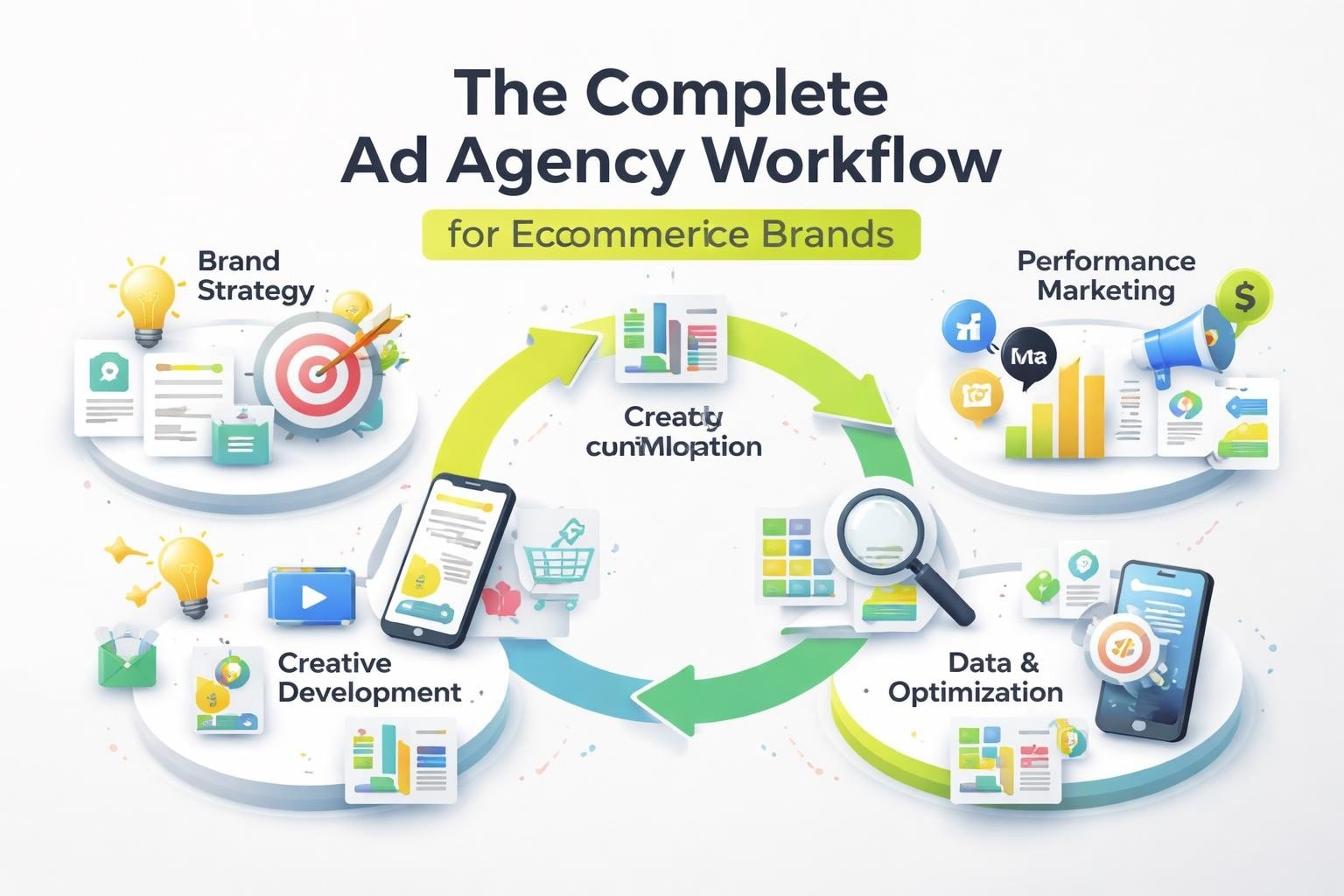
The world of ad agency work has evolved dramatically in the ecommerce era, where brands need partners who understand both creative excellence and data-driven performance. For fast-growing direct-to-consumer brands in fashion, beauty, lifestyle, and wellness sectors, choosing the right agency partnership can mean the difference between explosive growth and stagnant sales. Modern ad agency work requires a delicate balance between building compelling brand narratives and optimizing every dollar spent on customer acquisition. This guide breaks down exactly how effective ad agency work operates, what processes drive results, and how ecommerce brands can maximize their agency relationships.
Understanding the Core Components of Ad Agency Work
Ad agency work in 2026 encompasses far more than creating attractive advertisements. For ecommerce brands, advertising agencies must integrate brand strategy, technical implementation, and continuous optimization across multiple touchpoints.
The foundation of effective ad agency work starts with comprehensive brand discovery. This process typically takes 2-4 weeks and involves analyzing your current market position, competitive landscape, customer data, and growth objectives. For example, when Glossier partnered with creative agencies in 2023, they spent three weeks mapping their customer journey across 17 different touchpoints before launching any campaigns.
The Strategic Planning Phase
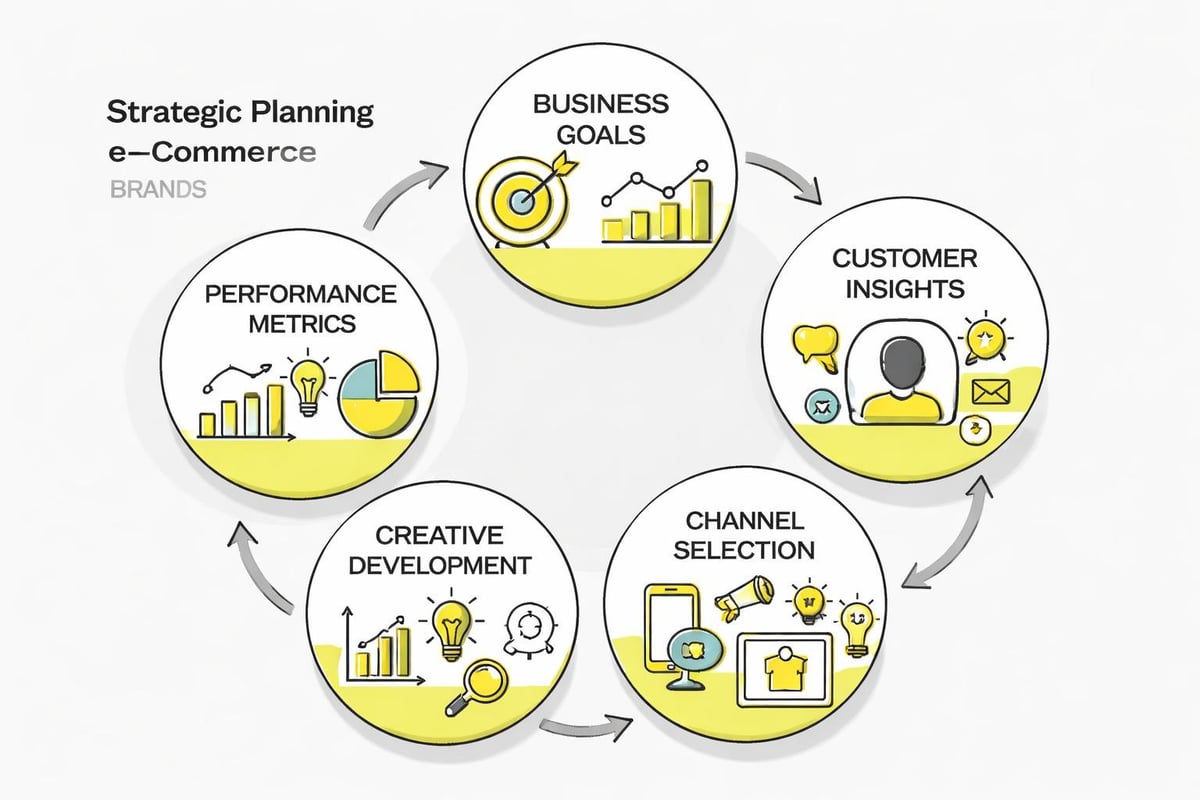
Strategic planning transforms business goals into actionable marketing initiatives. This phase of ad agency work should deliver:
- Detailed customer personas based on actual purchase data and behavioral analytics
- Channel-specific strategies tailored to where your audience actually spends time
- Budget allocation models that balance brand building with direct response
- Clear KPIs and measurement frameworks aligned with business objectives
- Competitive positioning that differentiates your brand in crowded markets
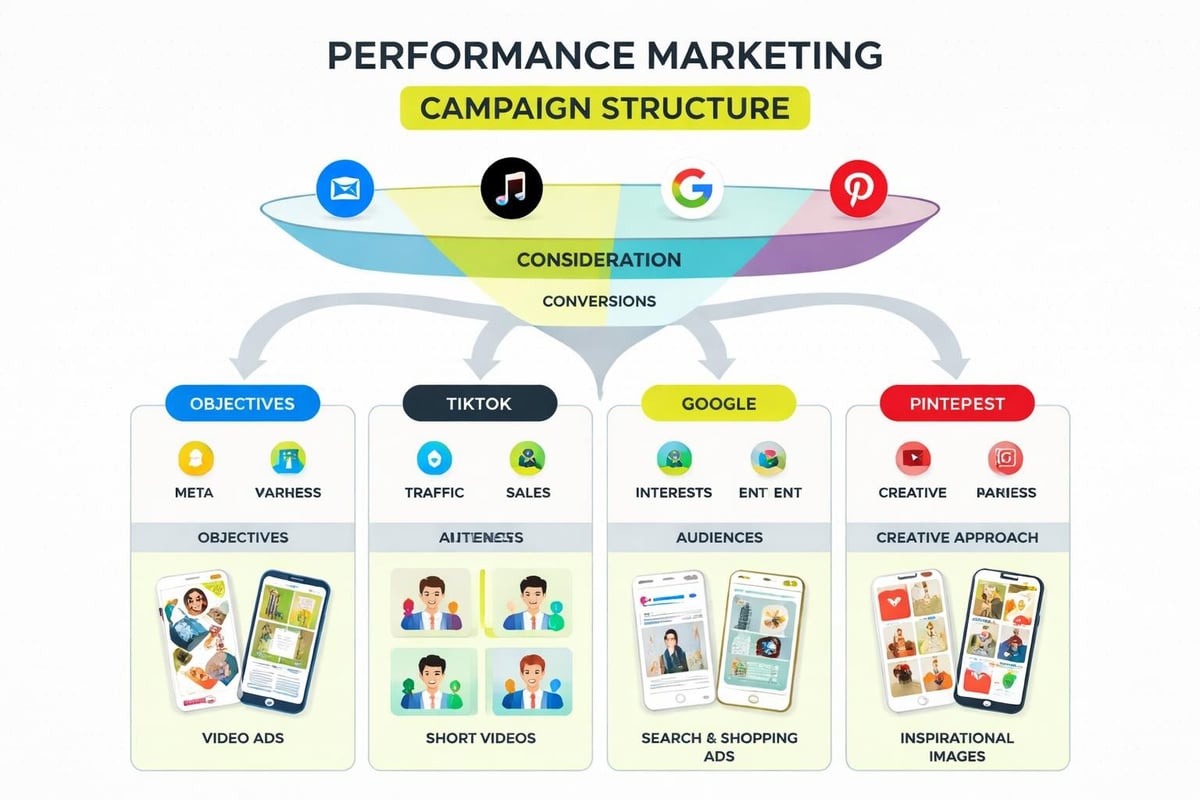
Modern ecommerce brands need agencies that understand platform-specific nuances. A TikTok strategy differs fundamentally from Pinterest or Google Shopping approaches. According to 2025 data from Shopify Plus merchants, brands that work with agencies using channel-specific strategies see 43% higher ROAS compared to those applying generic multi-channel approaches.
Creative Development That Converts
The creative phase represents the most visible aspect of ad agency work, but it must be grounded in conversion principles rather than pure aesthetics. Beauty brand Drunk Elephant demonstrated this perfectly when they redesigned their Meta advertising in early 2025, achieving a 67% increase in click-through rates by incorporating user-generated content alongside professionally produced assets.
Step-by-Step Creative Process
Step 1: Concept Development begins with reviewing strategic insights and creating multiple creative directions. Your agency should present 3-5 distinct concepts, each with mood boards, messaging frameworks, and channel applications.
Step 2: Asset Production involves creating the actual creative materials. For ecommerce, this includes product photography, lifestyle imagery, video content, ad copy variations, and graphic elements. Fashion brand Reformation's 2025 campaign with their agency partner produced 142 unique creative assets across six product launches.
Step 3: Testing Framework establishes how creatives will be tested and optimized. Set up A/B tests for:
- Headline variations (test 4-6 options per campaign)
- Visual approaches (product-focused vs. lifestyle vs. UGC)
- Call-to-action messaging and placement
- Video lengths (6-second vs. 15-second vs. 30-second versions)
- Audience segments and creative pairings
Step 4: Iteration and Scaling takes winning concepts and expands them. The best ad agency work doesn't stop at launch but continuously refines based on performance data.
| Creative Element | Testing Frequency | Optimization Metric | Target Improvement |
|---|---|---|---|
| Ad Headlines | Weekly | Click-Through Rate | 15-25% lift |
| Visual Assets | Bi-weekly | Engagement Rate | 20-30% lift |
| Video Hooks | Weekly | 3-Second View Rate | 10-15% lift |
| Landing Pages | Monthly | Conversion Rate | 25-40% lift |
Performance Marketing Execution
Performance marketing represents where ad agency work directly impacts revenue. This requires technical expertise across multiple platforms and the ability to optimize campaigns in real-time. Understanding how ad agencies operate their performance marketing services helps brands set appropriate expectations.
Platform-Specific Strategies
Meta Advertising demands constant creative refresh and sophisticated audience targeting. Home goods brand Nestera worked with their agency to implement a weekly creative rotation strategy, reducing ad fatigue by 52% and lowering cost-per-acquisition by $8.40 across their catalog campaigns.
The process for Meta success includes:
- Build comprehensive audience segments using first-party data
- Create lookalike audiences from high-LTV customer cohorts
- Structure campaigns by funnel stage (awareness, consideration, conversion)
- Implement dynamic product ads with personalized recommendations
- Test Advantage+ campaigns against manual targeting approaches
TikTok Marketing requires native content that doesn't feel like advertising. Beauty brand Glow Recipe increased their TikTok conversion rate by 89% in Q4 2025 by creating content that educated viewers about ingredients rather than directly selling products. Their agency produced 4-6 TikToks weekly, mixing trending sounds with product education.
Google Advertising combines Shopping campaigns, Search ads, and Performance Max. Wellness brand BioSil achieved a 3.8 ROAS on Google by implementing a comprehensive conversion rate optimization strategy that aligned ad messaging with landing page experiences.
Pinterest Advertising works exceptionally well for lifestyle and home brands. According to Pinterest's 2025 ecommerce data, users are 85% more likely to purchase based on Pins they save. Effective Pinterest ad agency work involves creating seasonal content boards, shopping-enabled Pins, and idea Pins that inspire rather than interrupt.
Email Marketing Integration
Email marketing remains one of the highest-ROI channels for ecommerce, with average returns of $42 for every dollar spent according to 2025 data. Professional Klaviyo implementation represents a critical component of comprehensive ad agency work.
Building Revenue-Generating Email Programs
Effective email programs require strategic flow architecture. Your agency should implement:
- Welcome series (4-6 emails) that introduce brand values, showcase bestsellers, and offer first-purchase incentives
- Abandoned cart sequences (3-4 emails) with progressive discounting and urgency mechanisms
- Post-purchase flows (5-7 emails) that educate on product use, request reviews, and introduce complementary products
- Win-back campaigns targeting customers who haven't purchased in 60-90 days
- VIP customer nurturing with exclusive previews and loyalty rewards
Fashion brand Colourful Rebel increased email-attributed revenue by 156% after their agency restructured their Klaviyo flows to include behavioral triggers based on browsing data, not just purchase history.
Segmentation drives email performance. Create segments based on:
- Purchase frequency and recency
- Product category preferences
- Average order value
- Engagement level with previous emails
- Lifecycle stage (new subscriber, active customer, at-risk)
The best ad agency work integrates email with paid advertising. Retarget email subscribers who don't open welcome emails with Meta ads. Suppress email purchasers from paid campaigns to reduce wasted spend. Use email data to build better lookalike audiences.
Conversion Rate Optimization Process
Conversion rate optimization transforms the same traffic into more revenue. Even a 0.5% improvement in conversion rate can represent hundreds of thousands in additional annual revenue for growing ecommerce brands. Professional CRO services should follow a systematic approach.
Step-by-Step CRO Implementation
Step 1: Data Collection and Analysis requires implementing comprehensive tracking. Install heatmaps (Hotjar or Microsoft Clarity), configure Google Analytics 4 with enhanced ecommerce tracking, and set up session recordings to watch actual user behavior.
Step 2: Hypothesis Development identifies specific elements to test based on data insights. For example, if analytics show 40% of users abandon at the shipping page, test transparent shipping cost communication earlier in the journey.
Step 3: Test Design and Implementation creates variations and splits traffic. Professional agencies run 3-5 simultaneous tests across different page types:
| Test Type | Page Location | Element Tested | Typical Impact |
|---|---|---|---|
| A/B Test | Product Page | Add to Cart Button Color/Copy | 8-15% lift |
| Multivariate | Homepage | Hero Image + Headline + CTA | 12-25% lift |
| A/B Test | Checkout | Trust Badges Placement | 5-10% lift |
| A/B Test | Collection Page | Product Grid vs. List View | 3-8% lift |
Step 4: Statistical Validation ensures test results are meaningful. Agencies should run tests until reaching 95% statistical significance and accounting for weekly traffic patterns. Beauty brand Clay Glow ran their checkout test for three full weeks to capture weekend vs. weekday buyer differences.
Step 5: Implementation and Iteration rolls out winners and starts new tests. CRO never ends because customer behavior constantly evolves.
Shopify-Specific Agency Capabilities
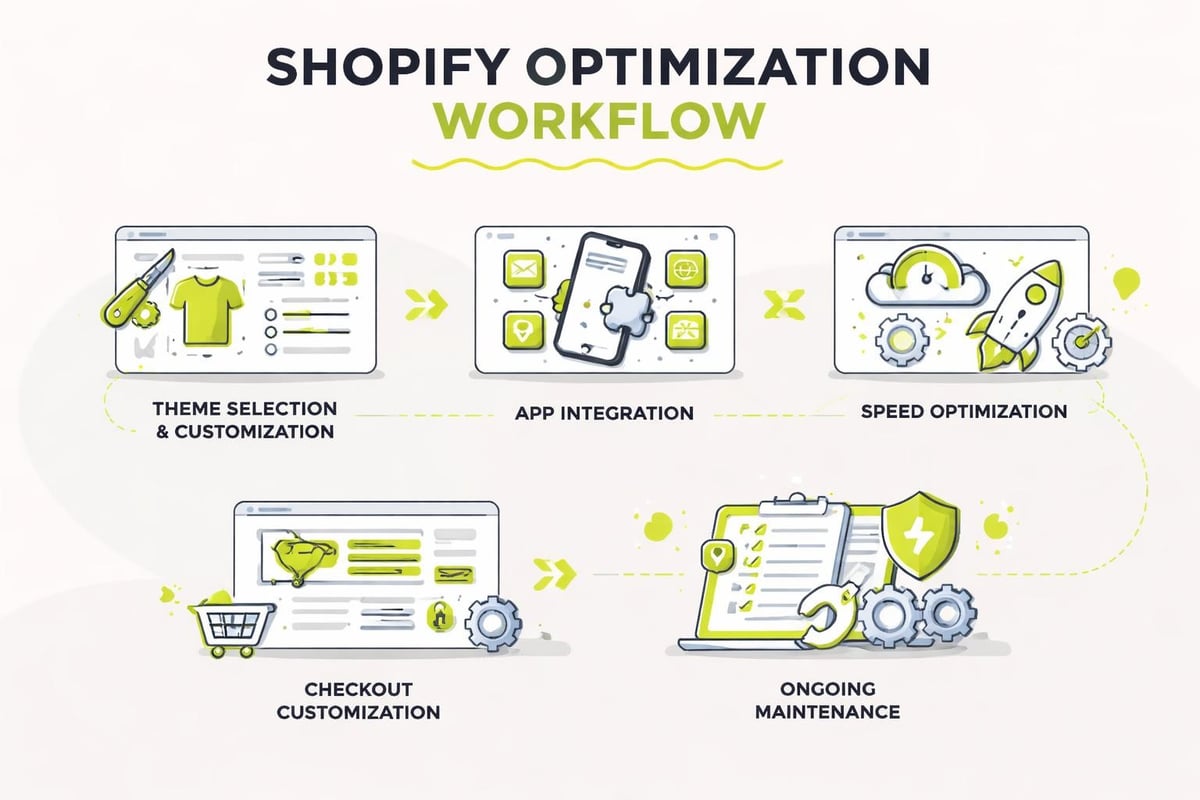
For ecommerce brands on Shopify, ad agency work must include deep platform expertise. Shopify design and development capabilities separate comprehensive agencies from surface-level marketing firms.
Technical implementation includes custom theme development that balances aesthetics with performance. Page speed directly impacts conversion rates, with a one-second delay reducing conversions by 7% according to Google's 2025 research. Professional agencies optimize:
- Image compression and lazy loading
- JavaScript bundling and minification
- App efficiency audits (removing redundant apps)
- Mobile responsiveness testing across 15+ devices
- Checkout extensibility customizations
Migration projects require meticulous planning. When lifestyle brand Love Stories migrated from Magento to Shopify Plus in 2024, their agency preserved all SEO equity, maintained 301 redirects for 3,200 URLs, and migrated customer data without any revenue disruption during the transition period.
Measuring Agency Performance
Effective ad agency work delivers measurable business impact. The advantages of hiring specialized agencies include access to sophisticated measurement frameworks that most in-house teams lack.
Key Performance Indicators
Track agency performance across multiple dimensions:
Revenue Metrics include total attributed revenue, revenue by channel, new customer acquisition revenue, and returning customer revenue. Set monthly targets with 15-25% year-over-year growth expectations for scaling brands.
Efficiency Metrics measure how effectively budget is deployed. Monitor blended ROAS (target 3.5x minimum for mature ecommerce brands), customer acquisition cost by channel (benchmark against customer lifetime value), and marketing efficiency ratio (revenue divided by total marketing spend).
Brand Health Indicators track long-term positioning. Measure direct traffic growth, branded search volume increases, social media engagement rates, and email list growth rate. These metrics indicate whether ad agency work builds sustainable brand equity or just drives transactional sales.
Customer Quality Metrics reveal whether acquired customers are valuable. Track 90-day repeat purchase rate (target 25-35% for consumable products), average order value trends, and customer lifetime value by acquisition channel.
Home brand Kinfill discovered through their agency analytics that TikTok customers had 40% higher lifetime value than Meta customers despite higher initial acquisition costs, leading to a strategic budget reallocation that increased overall profitability by 28%.
Building Effective Agency Partnerships
The relationship between brand and agency determines success as much as tactical execution. Understanding career roles within advertising agencies helps brands know who they should interact with and for what purposes.
Communication and Collaboration Framework
Establish weekly touchpoints with your agency team. These 30-60 minute calls should review performance data, discuss upcoming initiatives, and address challenges. Monthly business reviews provide strategic perspective, examining quarterly goals, competitive landscape changes, and long-term roadmap adjustments.
Create shared documentation systems using tools like Notion or Google Drive. Maintain living documents for:
- Brand guidelines and creative standards
- Approved messaging frameworks and copy templates
- Performance dashboards with real-time data access
- Content calendars spanning 90 days minimum
- Testing roadmaps showing planned experiments
Transparency accelerates problem-solving. Share full access to analytics platforms, customer data (within privacy compliance), and business performance metrics. Agencies can't optimize what they can't see. Fashion brand Atelje increased their agency's effectiveness by 34% after providing access to inventory data, allowing better campaign timing around stock availability.
Define decision-making authority clearly. Establish which changes require approval (brand messaging shifts, budget reallocations over $5,000, creative direction changes) versus what agencies can execute independently (ad copy variations, bid adjustments, minor landing page tweaks).
Real-World Performance Benchmarks
Understanding industry benchmarks helps evaluate whether your ad agency work delivers competitive results. Data from 500+ Shopify Plus fashion and beauty brands in 2025 provides these reference points:
Meta Advertising Benchmarks:
- Click-through rate: 1.2-1.8% for prospecting, 2.5-4.0% for retargeting
- Cost per click: $0.80-$1.40 for fashion, $1.10-$1.90 for beauty
- Conversion rate: 2.8-4.2% from cold traffic, 6.5-9.5% from warm audiences
- ROAS: 2.5x-3.5x blended across all campaigns
TikTok Advertising Benchmarks:
- Video view rate (3 seconds): 35-45%
- Click-through rate: 1.5-2.2%
- Conversion rate: 1.8-3.2% (lower than Meta but often higher-value customers)
- ROAS: 2.0x-3.2x (improving as platform matures)
Google Shopping Benchmarks:
- Click-through rate: 0.8-1.2%
- Conversion rate: 3.5-5.5%
- Cost per acquisition: $25-$45 for fashion, $35-$60 for beauty
- ROAS: 4.0x-6.5x (typically highest-performing channel)
Email Marketing Benchmarks:
- Open rate: 38-45% for engaged segments
- Click rate: 4.5-7.0%
- Conversion rate: 3.0-5.5% from email traffic
- Revenue per email: $0.15-$0.35 for promotional sends
Wellness brand Stanley achieved results well above these benchmarks after partnering with an agency that understood their specific customer psychology, reaching 6.2x ROAS on Google and 52% email open rates through hyper-personalized segmentation.
Advanced Attribution and Analytics
Sophisticated ad agency work requires comprehensive understanding of advertising career paths including data analytics specialists who implement multi-touch attribution models.
Modern attribution moves beyond last-click models. Implement:
- First-touch attribution to understand top-of-funnel channel effectiveness
- Linear attribution to credit all touchpoints equally
- Time-decay attribution giving more credit to recent interactions
- Position-based attribution emphasizing first and last touchpoints
- Data-driven attribution using machine learning to assign credit algorithmically
Beauty brand O My Bag discovered through proper attribution modeling that Pinterest drove only 8% of last-click conversions but influenced 31% of all purchases when using multi-touch attribution. This insight prevented cutting a highly valuable channel.
Incrementality testing proves true channel impact. Run geo-holdout tests where you pause advertising in specific markets to measure organic baseline sales versus advertising-driven lift. This reveals whether channels truly drive incremental revenue or simply capture existing demand.
Privacy changes in 2024-2026 make server-side tracking essential. Implement Shopify's native tracking along with server-side Google Tag Manager to maintain accurate measurement despite browser limitations. Agencies handling this technical implementation deliver far more reliable performance data than those relying solely on pixel-based tracking.
Successful ad agency work in the ecommerce space requires balancing creative brand building with rigorous performance optimization across multiple channels and touchpoints. The brands achieving exceptional growth in 2026 partner with agencies that bring both strategic creativity and analytical discipline to every campaign, test, and optimization. If you're ready to work with a team that understands this critical balance, Good Karma Agency specializes in helping fast-growing ecommerce brands optimize for both brand equity and measurable performance across Shopify development, conversion rate optimization, and multi-channel performance marketing.


